

April 22, 2026 · Richard T. Swenson, M.D.
The Most Common Imaging Question
"Do I need an MRI?" is one of the most frequent questions I hear from accident patients. Movies, television, and well-meaning friends have convinced many people that an MRI is the default test for any injury. The reality is more nuanced. An MRI is a powerful tool — but ordering it at the wrong time, for the wrong reason, can actually delay your recovery and complicate your care.
This article explains what MRI actually shows, when it''s necessary after a collision, and when it isn''t.
What an MRI Actually Does
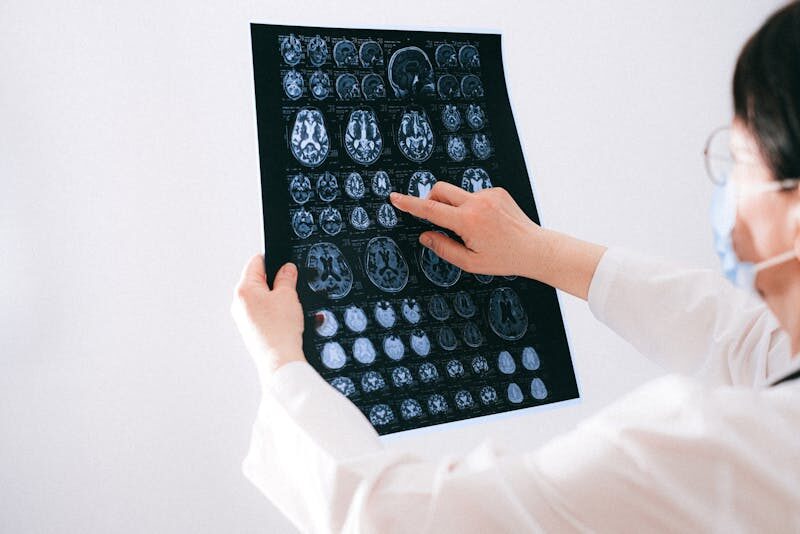
MRI — magnetic resonance imaging — uses strong magnets and radio waves to produce detailed images of soft tissue. Unlike X-rays, which excel at showing bones, MRI is the gold standard for visualizing:
- Intervertebral discs
- Spinal nerves and nerve roots
- Ligaments and tendons
- Cartilage
- Muscle tears
- Soft-tissue swelling
- Brain tissue (when neurological injury is suspected)
What MRI does not do is show pain, inflammation severity, or functional impairment directly. A patient can have severe symptoms and a "clean" MRI, or alarming MRI findings with few symptoms. MRI findings must always be interpreted in the context of the clinical exam.
When an MRI Is Clearly Indicated
Certain findings after a crash make an MRI clinically necessary:
Neurological Symptoms
Numbness, tingling, or weakness in an arm or leg suggests nerve root compression or spinal cord involvement. MRI is the best test to identify the specific level and cause of nerve injury.
Radiating Pain
Pain that travels from the neck into the arm, or from the low back below the knee, suggests a disc herniation or nerve root irritation. MRI confirms the diagnosis and guides treatment.
Failed Conservative Care
If pain persists significantly after 4–6 weeks of appropriate conservative treatment — chiropractic care, physical therapy, medication — MRI helps identify underlying pathology that may require a different treatment approach.
Suspected Head Injury
Post-concussion symptoms that don''t resolve in 2–3 weeks, or that include visual disturbances, significant cognitive changes, or loss of coordination, warrant brain MRI.
Suspected Ligament Injury
Severe ligamentous instability in the cervical spine can be life-threatening if missed. Patients with severe neck pain and abnormal X-ray findings should have MRI to rule out cervical ligament disruption.
Pre-Surgical Planning
If a patient is being evaluated for spinal surgery, injections, or specialist care, MRI is essential for planning.
When an MRI Is Probably Not Needed (Yet)
Ordering MRI too early — in the first 1–2 weeks — often produces findings that aren''t medically useful:
- Inflammation and bruising appear dramatic but heal on their own
- Pre-existing degenerative changes look concerning but may be unrelated to the crash
- Findings that would guide treatment likely won''t change in the acute phase anyway
For most uncomplicated soft-tissue injuries, the first 2–4 weeks are better spent on active treatment. If symptoms resolve, no MRI is needed. If they don''t resolve, MRI then produces more clinically useful information.
The "Red Flag" List
These findings should prompt MRI even in the first few days after a crash:
- Numbness or weakness in any extremity
- Loss of bladder or bowel control
- Numbness in the groin or inner thighs (cauda equina concern)
- Difficulty walking or significant loss of coordination
- Severe headaches with vomiting, confusion, or cognitive changes
- Significant neck pain with any abnormality on initial X-ray
- Severe unremitting pain unresponsive to medication
The Cost-Benefit Question
MRI is expensive — typically $1,000 to $3,500 depending on the region imaged and whether contrast is used. If another driver caused your accident, their insurance typically pays, so cost may not be a primary concern. If you''re paying out of pocket, the question becomes whether the information from MRI will change your treatment. If not, the test isn''t worth its cost.
MRI and Insurance Claims
Patients sometimes believe an MRI is needed to "prove" their injuries for insurance purposes. This is partly true. Objective imaging findings strengthen claims, especially for disc herniations or significant soft-tissue injury. But an MRI that is ordered purely for legal or claim purposes — without clinical justification — is often flagged by insurers and may actually weaken a case.
The right approach is to order imaging when it''s clinically necessary. If the imaging supports the claim, that''s a natural consequence, not the primary reason for the test.
The Accident Care Approach
At Accident Care and Treatment Center, we have on-site imaging — including MRI — which means we can get the right study done quickly when it''s indicated. Our approach:
- Days 1–3 — thorough clinical exam and X-rays to rule out fracture
- Weeks 1–4 — active treatment with regular reassessment
- After 4 weeks — if symptoms aren''t resolving as expected, advanced imaging including MRI
- Anytime — immediate MRI for red-flag symptoms
This disciplined approach gets patients the right test at the right time — not every test, just in case.
Talk to a Physician Before Ordering Imaging
If you''re wondering whether you need an MRI after a crash, the answer depends on your symptoms, exam findings, and clinical course. A brief consultation can save you from unnecessary imaging or identify when advanced testing is truly indicated.
Schedule a consultation or call (405) 631-0011. We will help you determine what testing — if any — is appropriate for your specific situation.
Frequently Asked Questions
Do I need an MRI after a car accident?
Not always. MRI is indicated when you have neurological symptoms (numbness, weakness, tingling), radiating pain, suspected disc herniation, symptoms that don't improve after 4–6 weeks of conservative care, or red-flag findings on exam. Most uncomplicated soft-tissue injuries don't require MRI.
How soon after a car accident should I get an MRI?
For most injuries, MRI is most useful 4–6 weeks after the crash if symptoms haven't resolved. For red-flag symptoms — numbness, weakness, loss of bladder control, severe head injury — MRI should be ordered immediately. Very early MRI often shows inflammation that would resolve on its own.
What does an MRI show after a car accident?
MRI shows soft tissue in detail — discs, nerves, ligaments, muscles, cartilage, and (for the head) brain tissue. It can identify disc herniations, nerve root compression, spinal cord injury, ligament tears, muscle tears, and brain injury. It does not show pain or inflammation severity directly.
Is an MRI covered by car insurance?
Yes, in most cases. If an MRI is medically necessary and ordered by a physician, the at-fault driver’s insurance typically covers it. Most policies do not require pre-authorization, though some insurers scrutinize imaging ordered early or without documented neurological findings.
Can an MRI be normal even if I'm in pain?
Yes. Pain comes from many sources that MRI can't directly visualize — inflammation, muscle spasm, facet joint irritation, nerve sensitization. A normal MRI rules out structural causes but does not mean you're uninjured. Symptoms and exam findings guide treatment as much as imaging does.
Injured in an Auto Accident? We Can Help
Accident Care and Treatment Center has been exclusively dedicated to auto-accident injury since 1995. Our Oklahoma City clinic at 3209 NW Expressway provides a complete continuum of care under one roof:
- Licensed medical doctors, not chiropractors, who diagnose, prescribe, and direct care
- On-site imaging: digital X-ray, MRI, CT, and ultrasound all performed same-day
- Physical therapy: in-house therapists coordinate directly with your physician
- Interventional pain management: trigger point injections, nerve blocks, and epidurals when needed
- Direct insurance billing: we bill the at-fault driver’s insurance, so most patients pay nothing up front
- Same-day appointments and walk-ins welcome: Monday through Friday
When to Seek Evaluation
Seek a medical evaluation within 24–72 hours of the accident if you experience any of the following:
- Neck, back, shoulder, or head pain, even if mild or delayed
- Headaches, dizziness, or light/noise sensitivity
- Tingling, numbness, or weakness anywhere in the body
- Reduced range of motion or stiffness
- Difficulty concentrating, memory changes, or sleep disruption
Call (405) 842-3209 or walk in during business hours. We serve Oklahoma City, Edmond, Norman, Moore, Midwest City, Del City, Yukon, and Mustang.