

Auto Accident Injury FAQ
Answers to the most common questions about accident care in Oklahoma City
- Same-day appointments
- On-site imaging
- No upfront out-of-pocket cost
- Since 1995Treating accident injuries
- Same dayAppointments & walk-ins
- On-siteX-ray, MRI, CT, ultrasound & fluoroscopy
- $0Upfront out-of-pocket for most patients
Quick Answers for New Patients
Before you arrive, review the most common questions our front desk hears. If you don't see your answer below, call (405) 842-3209 or walk in during business hours.
What to Expect at Your First Visit
- 45–60 minute visit — intake, physician exam, imaging if indicated, and treatment plan
- Bring photo ID, auto insurance card, and any accident paperwork
- Walk-ins welcome — no appointment required during business hours
- On-site imaging — X-ray, MRI, CT, ultrasound, and fluoroscopy all on-site
- Treatment can begin same day once diagnosis is confirmed
Insurance We Handle
- The at-fault driver’s auto insurance
- MedPay coverage
- At-fault driver liability claims
- Workers' compensation
- Letters of Protection from personal injury attorneys
Common Injuries We Diagnose and Treat
- Whiplash and cervical strain
- Lumbar strain and disc injury
- Concussion, traumatic brain injuries, and post-concussion syndrome
- Soft tissue injuries (muscle, tendon, ligament)
- Headaches and post-traumatic pain
- Shoulder, knee, and joint injuries
Hurt in an accident? Get seen today. Walk-ins welcome.
Quick Reference for New Patients
What to Bring
- Photo ID (driver’s license or state ID)
- Auto insurance card, yours or the at-fault driver’s
- Police report or accident exchange form if available
- List of current medications and known allergies
- Attorney contact information if represented
Insurance Types We Bill Directly
- The at-fault driver’s auto insurance
- MedPay coverage
- At-fault driver liability insurance
- Workers’ compensation
- Letters of Protection (LOP) from personal injury attorneys
Clinic Hours
- Monday, Wednesday, Friday: 8:00 AM to 5:00 PM
- Tuesday, Thursday: 9:00 AM to 6:00 PM
- Walk-ins welcome during all business hours
Get Answers to Accident Care's Most Common Questions
What should I do if I've been in an auto accident?
After an auto accident, call the police, file an accident report, and make sure you're okay. Call your auto insurance carrier, take pictures, and document how the accident happened. Limit discussion with others at the scene (except the police). Most importantly, get real medical care from providers who know auto accidents. Call Accident Care at (405) 842-3209.
What do I need to bring with me for my first visit?
If you have insurance, bring your card. If you don't have medical insurance, you will still be seen — we're set up to evaluate and care for you without requiring you to pay anything up-front. When you call to book an appointment, we'll explain what you can expect and answer any questions. Call (405) 842-3209.
Will my care involve surgery?
We can't know that without first evaluating you. However, we have a long history of providing comprehensive treatment that gets excellent outcomes without surgery. If surgery is necessary, our doctors will refer you to the appropriate care. But it doesn't happen very often — most auto accident injuries can be treated effectively without surgery.
Do you normally conduct tests at the first visit? What kind?
Yes. The first thing we'll do is evaluate you for injury to determine if, in what way, and to what extent you are injured. We conduct many tests right here — including medical imaging such as CT, X-rays, digital ultrasound, and MRI — for maximum efficiency in diagnosing your injury. If additional tests are needed, we'll order them.
Will I get treatment recommendations during my first visit?
Our aim is to reach an accurate, complete diagnosis and get you into treatment as quickly as possible. We cannot promise that you'll have your treatment recommendation during that first visit, as some testing may not yet be complete. But if we know what's going on and have treatment options in mind, we'll let you know as soon as we can — sometimes that can be during the initial appointment.
What if I don't have the money to get evaluated immediately?
Don't let money stop you from getting evaluated. We don't make you pay upfront out-of-pocket. Just come in and get the care you need. Delaying care can lead to worsening of your injury — and many people run out the clock on insurance coverage by waiting too long. Call us now: (405) 842-3209.
Where will my treatment be performed?
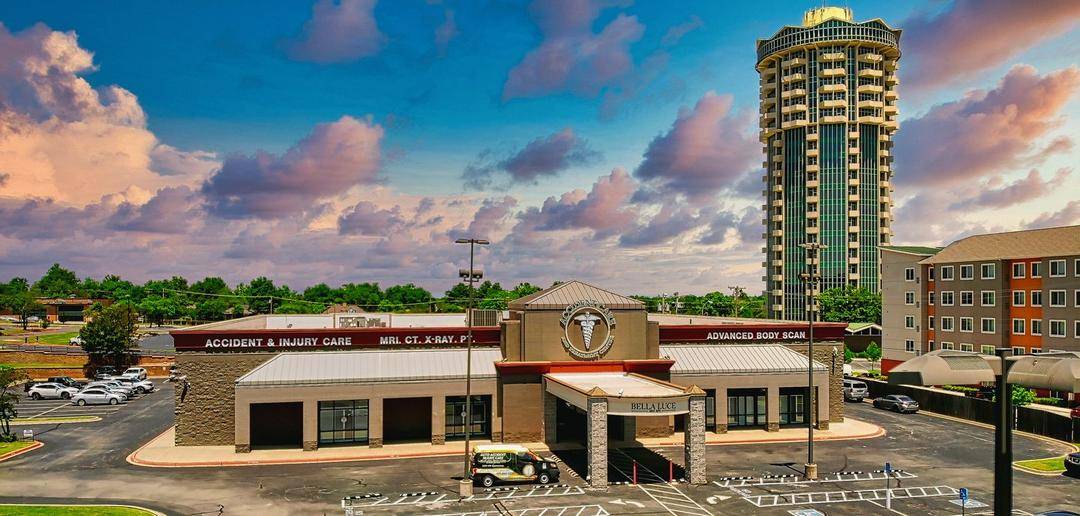
Right here at Accident Care and Treatment Center, at 3209 NW Expressway, Oklahoma City. We have virtually everything that may be needed — therapies, equipment, and medications. If other treatment modalities are needed, we'll help you get the right care so you can get better and get back to your life.
Do you accept walk-ins?
Yes. Walk-ins are always welcome at Accident Care and Treatment Center. We also offer same-day scheduled appointments. Call (405) 842-3209 or just come in.
All Accident Care FAQs
438 questions from across our site
Getting started and your visit
From Home page
Do I need my own health insurance to be treated at Accident Care?
No. If you have been in an auto accident, your auto insurance, or the other driver's auto insurance, covers your medical treatment. You do not need personal health insurance and there is no upfront out-of-pocket cost to you.
How soon after an accident should I be seen by a doctor?
You should be evaluated as soon as possible, ideally within 24–72 hours of the accident. Many injuries, including whiplash, may not cause significant pain until days after the accident. Early diagnosis also protects your legal rights with insurance companies.
What injuries does Accident Care treat?
Accident Care treats all types of auto accident injuries including whiplash, neck pain, back pain, soft tissue damage, chest injuries, head injuries (including traumatic brain injuries), knee injuries, shoulder injuries, and spinal injuries. Our licensed medical doctors diagnose and treat the full range of auto-accident related injuries.
Do you accept walk-ins?
Yes, walk-ins are always welcome at Accident Care and Treatment Center. We also offer same-day appointments. You can call us at (405) 842-3209 or request an appointment online.
What does the first visit at Accident Care involve?
During your first visit, a licensed medical doctor will perform a comprehensive physical examination and evaluate your injuries. Depending on your symptoms, we may perform on-site diagnostics such as digital X-rays, MRI, or CT scans. All services are provided in one location.
Where is Accident Care located?
Accident Care and Treatment Center is located at 3209 NW Expressway, Oklahoma City, OK 73112, across from Integris Baptist Hospital. We serve patients from Oklahoma City, Edmond, Norman, Moore, and surrounding areas.
What are your hours?
We are open Monday, Wednesday, and Friday from 8:00am to 5:00pm, and Tuesday and Thursday from 9:00am to 6:00pm. Walk-ins are always welcome during business hours.
From Contact us
How do I schedule an appointment at Accident Care?
Call (405) 842-3209 or request an appointment online. Same-day appointments are available and walk-ins are always welcome during business hours.
Do I need an appointment or can I walk in?
Both work. Walk-ins are welcome during business hours. For a guaranteed time slot, call (405) 842-3209 for a same-day appointment.
Do I need health insurance to be seen?
No. If another driver caused your accident, their liability insurance covers your care. We bill directly with zero upfront out-of-pocket cost to you.
What should I bring to my first visit?
A photo ID, your auto insurance information (yours or the at-fault driver’s), any accident-related paperwork (police report, exchange form), and a list of current medications.
Do you see patients from outside Oklahoma City?
Yes. We serve patients from Edmond, Norman, Moore, Midwest City, Del City, Yukon, Mustang, and surrounding areas. Many patients travel from across the OKC metro for specialized auto injury care.
Do you coordinate with attorneys and insurance companies?
Yes. We work directly with personal injury attorneys and auto insurance companies, producing detailed narrative reports and ICD-10 coded medical records to support your claim.
From Patient resources
What resources does Accident Care provide to patients?
Accident Care provides a complete library of patient resources including guidance on what to do after an accident, what to expect at your first visit, auto insurance and billing information, frequently asked questions, attorney coordination, and downloadable patient forms.
Do I need to fill out forms before my first appointment?
No, you can complete all intake paperwork at our reception desk when you arrive. However, you can also download and complete our patient forms in advance to save time during check-in. Visit our Forms page to access them.
How do I get my medical records after treatment?
You can request copies of your medical records at any time by calling our office at (405) 842-3209. Records are typically available within 5–10 business days for you or your attorney. Records are provided at no charge to you for your personal use.
Do you provide narrative reports for my attorney?
Yes. We produce detailed narrative medical reports, ICD-10 coded diagnoses, causation statements, and future-care projections designed to meet the standards required by personal injury attorneys and insurance carriers.
What if I have questions about my insurance coverage?
Our billing team verifies your coverage during intake and can answer questions about liability claims, workers’ compensation, and Letters of Protection. Visit our Insurance page for detailed information, or call (405) 842-3209.
Can family members come to my appointments?
Yes. Family members and friends are welcome to accompany you. For patients with concussion, significant pain, or mobility limitations, we strongly encourage bringing someone for support and transportation.
Is there parking at the clinic?
Yes. We have free on-site parking at our 3209 NW Expressway location. The clinic is wheelchair accessible with accessible parking spaces directly in front.
How do I prepare for an MRI or CT scan?
No fasting or special preparation is typically required. Wear comfortable clothing without metal zippers or fasteners for MRI. If you have implanted medical devices (pacemakers, metal implants, neurostimulators) tell your technologist in advance. We’ll guide you through any specific preparation during check-in.
From What to Do After a Car Accident in Oklahoma City
How long do I have to see a doctor after a car accident in Oklahoma?
You should seek medical evaluation within 24–72 hours of the accident. Many serious injuries like whiplash, disc herniation, and concussions do not produce obvious symptoms immediately. Insurance claims need prompt medical documentation. Delays can hurt both your recovery and your claim.
What if I don't feel any pain after the accident?
Feeling no pain immediately after a collision is common and does not mean you are uninjured. Adrenaline masks pain for hours or days. Soft-tissue injuries (whiplash, cervical strain, micro-tears) typically begin hurting 24–72 hours after impact. Get evaluated even if you feel fine.
Who pays for medical treatment after a car accident in Oklahoma City?
If another driver caused the accident, their auto insurance pays for your medical treatment. Most patients pay nothing up front. Call us for details. If another driver was at fault, their liability insurance may also cover your medical bills. Accident Care accepts all auto insurance and works directly with insurers and attorneys.
Do I need a lawyer after a car accident in OKC?
Not always, but if you were injured, another party was at fault, or the insurance settlement offer seems low, consulting a personal injury attorney is recommended. Proper medical documentation from an auto accident specialist strengthens any legal claim.
What should I photograph at the scene of a car accident?
Photograph all vehicle damage from multiple angles and distances, the position of vehicles on the road, traffic signs and signals, road conditions (rain, ice, potholes), any visible injuries, the other driver's license and insurance card, and license plates of all vehicles involved.
What if the accident seems minor, do I still need medical care?
Yes. Low-speed collisions regularly produce whiplash, disc injuries, and concussions. Vehicle damage is a poor predictor of bodily injury; the forces transferred to your body can be severe even when the car looks fine. A medical evaluation within 72 hours is strongly recommended.
From What to Expect at Your First Visit
How long does the first visit take?
Plan on 45–60 minutes for your initial evaluation. This includes intake paperwork, physician examination, any needed imaging, and review of your treatment plan. If imaging is extensive, it may take slightly longer.
What should I bring to my first appointment?
A photo ID, your auto insurance card (yours or the at-fault driver’s), any accident-related paperwork (police report or exchange form), a list of current medications, and attorney contact information if you have one.
Do I need to fast or prepare for imaging?
No special preparation is required for X-ray, MRI, CT, ultrasound, or fluoroscopy in most cases. If you have metal implants, pacemakers, or other medical devices, tell the technologist; some devices are MRI-incompatible. We’ll guide you through any specific prep during intake.
Will I get my diagnosis the same day?
Yes. Your physician explains the exam findings before you leave and issues a written diagnosis with ICD-10 codes. Imaging results are reviewed with you at your next appointment, usually within a week. Board-certified radiologists read your imaging, and your doctor reviews the results with you at your next appointment, usually within a week.
Can treatment begin on the first visit?
Often yes. Once your diagnosis is confirmed, physical therapy, pain management procedures, and medication management can begin the same day. Waiting longer does not help; early treatment produces better recovery outcomes.
What if I’m in pain or can’t sit comfortably during intake?
Let our staff know. We can expedite your intake, offer a reclined position, provide ice packs, or begin the physician exam immediately. Your comfort is a priority throughout the visit.
Do I need to bring someone with me?
It is not required, but many patients bring a family member or friend for support. If you were recently in an accident and have a concussion or significant pain, bringing a driver or companion is recommended.
What happens if I need a specialist referral?
If your injuries require a specialist (orthopedic surgeon, neurologist, or neurosurgeon) we coordinate the referral directly from our clinic and share your records and imaging with the specialist.
From Patient Forms
What forms do I need to fill out for my first visit?
New patients complete a standard medical intake form (accident details, symptoms, medical history, medications), a HIPAA privacy acknowledgment, and an insurance/billing authorization. You can complete these at our front desk or download and complete them in advance.
Can I fill out my paperwork before arriving?
Yes. Downloading and completing intake forms in advance shortens your check-in to about five minutes. Bring the completed forms with you, along with photo ID and your auto insurance card.
Is my information kept private?
Yes. All patient information is protected under HIPAA and shared only with your authorized providers, insurance carrier, and (with your written consent) your personal injury attorney.
What if I don’t speak English fluently?
Our clinical staff includes bilingual English/Spanish speakers, and we provide forms in Spanish. For other languages, please let us know when you schedule and we can arrange interpreter support.
Can I sign forms electronically?
Yes. Most intake paperwork can be signed electronically using a tablet at our front desk. If you prefer paper forms, those are also available.
Will I need to sign a Letter of Protection?
Only if your personal injury attorney requests it. A Letter of Protection (LOP) allows us to treat you now with payment deferred until your case settles. Your attorney provides the LOP; we sign it alongside you.
What should I bring in addition to my forms?
Photo ID, your auto insurance card (yours or the at-fault driver’s), the police report or accident exchange form if available, attorney contact information if you have one, and a current list of medications and allergies.
How do I request copies of my medical records later?
Call our office at (405) 842-3209 or submit a written records request. Copies are typically available within 5–10 business days and are provided at no charge for your personal use.
Insurance and billing
From Affordable Care
How much does treatment cost out of pocket?
Nothing. When another driver caused the accident, their auto insurance pays for medically necessary treatment. We bill auto insurance directly; you pay nothing up front.
Who pays if the other driver was at fault?
The at-fault driver’s liability insurance pays for your medical treatment. Most patients pay nothing up front. Call us for details.
What if I don't have auto insurance?
Even without auto insurance, we can often arrange treatment through the at-fault driver's liability insurance or through a Letter of Protection with a personal injury attorney. Call (405) 842-3209 to discuss your situation.
What is a Letter of Protection (LOP)?
A Letter of Protection is an agreement from your personal injury attorney that medical bills will be paid from your eventual settlement. Accident Care accepts LOPs, meaning you receive treatment now with payment deferred until your case resolves.
Do I need health insurance to get treated?
No. For auto accident injuries, your health insurance is not required. Auto insurance covers medically necessary treatment.
Will I get a bill if insurance denies coverage?
We will work with you and your attorney to resolve any coverage disputes. In rare cases where coverage is definitively denied, we discuss options before any balance is your responsibility.
Do you offer payment plans?
Yes. For the rare cases where self-pay is necessary, we offer flexible payment plans. Most patients never need this because auto insurance or liability coverage handles their care.
Can I use workers' compensation?
Yes. If your accident occurred at work or during employment, Oklahoma workers' compensation covers treatment. We work directly with workers' comp carriers.
From Auto Accident Insurance — No Upfront Out-of-Pocket Cost
Do I need health insurance to be treated at Accident Care?
No. Auto accident injuries are covered by auto insurance: your MedPay or the at-fault driver’s liability coverage. You do not need personal health insurance and there is no upfront out-of-pocket cost.
What if the other driver was at fault?
The at-fault driver’s liability insurance covers your treatment. You still receive care immediately; we handle all billing and documentation while the liability claim is processed.
What is MedPay?
MedPay (Medical Payments Coverage) is an optional auto insurance benefit that pays for medical expenses after an accident, regardless of fault.
What if I have no insurance at all?
Even if you have no auto or health insurance, come in for evaluation. For accident-related injuries we can often coordinate with the at-fault driver’s insurance. Call (405) 842-3209 to discuss.
Diagnostics and imaging
From Medical Diagnostics & Imaging for Auto Injuries
What imaging is available at Accident Care?
We perform digital X-ray, MRI, CT scan, diagnostic ultrasound, and fluoroscopy all on-site at our Oklahoma City clinic. No outside referral is needed, and every modality is in-house. X-rays are usually done the same day; MRI and fluoroscopy are scheduled as a separate appointment.
Can I get an MRI at Accident Care?
Yes. Accident Care has its own MRI on-site, so there is no outside imaging center to deal with. MRI is scheduled as its own appointment here, and your doctor reviews the results with you at your next appointment, usually within a week.
Do I need pre-authorization from my auto insurance?
Typically no. Auto accident injury patients usually do not need pre-authorization for medically necessary imaging. Accident Care orders and performs imaging based on your physician’s clinical judgment.
Will insurance cover my imaging after a car accident?
Yes. When another driver caused the accident, their insurance covers medically necessary X-ray, MRI, CT, ultrasound, and fluoroscopy. Zero upfront out-of-pocket cost to you.
What is the difference between a high-field and low-field MRI?
High-field MRI (1.5 Tesla or greater) produces sharper images of soft tissue and discs. Low-field or open MRI trades image quality for patient comfort. For accident injury diagnosis, high-field MRI detects disc and soft-tissue detail that low-field units miss.
Is X-ray enough to diagnose whiplash or soft-tissue injury?
No. X-ray shows bone and alignment only. Whiplash, disc herniation, and most soft-tissue injuries are not visible on X-ray. MRI is the gold standard for diagnosing these injuries.
How long does each imaging study take?
X-ray takes about 10 minutes. Cervical or lumbar MRI takes 30–45 minutes. CT scan takes 10–15 minutes. Ultrasound takes 15–30 minutes. Your doctor reviews the results with you at your next appointment, usually within a week.
Do I need a referral for imaging at Accident Care?
No outside referral is needed. Accident Care’s physicians evaluate you, determine what imaging is medically necessary, order the study, and perform it here in our facility, with no outside imaging center.
From MRI After a Car Accident: 1.5 Tesla Wide-Bore Imaging in Oklahoma City
What does an MRI show that an X-ray does not?
X-ray shows bone and alignment. MRI shows the soft tissues injured in most car accidents: discs, ligaments, muscles, tendons, cartilage, the spinal cord, and nerve roots. It also shows bone marrow edema (bone bruising) and some fractures that are invisible on X-ray.
Is a 1.5 Tesla MRI good enough, or do I need 3 Tesla?
1.5 T is the established clinical standard for spine and musculoskeletal imaging. 3 T offers more signal, which helps in some brain and small-joint studies, but it also produces more artifact near metal hardware and more tissue heating. For most post-accident spine and joint questions, a high-field 1.5 T scanner answers the clinical question.
Will an MRI show whiplash?
Whiplash (whiplash-associated disorder) is a clinical diagnosis based on the mechanism of injury and your exam. In milder grades the MRI is often normal. MRI is used to look for the injuries that can come with whiplash: disc herniation, ligament injury, facet effusion, bone bruising, and nerve root compression.
How soon after a car accident should I get an MRI?
Not everyone needs one right away. Your physician orders MRI when the exam suggests a disc, ligament, or nerve injury, when there are neurological signs such as numbness or weakness, or when symptoms are not improving as expected. Red-flag symptoms are imaged sooner.
I’m claustrophobic. Can I still have an MRI?
Usually, yes. Our GE Signa 450W has a wider, shorter bore than older scanners, so there is more room around your head and body. Tell the team ahead of time; we can talk you through the scan, and in some cases your physician can discuss options to help you relax.
Do I need contrast dye for my MRI?
Most MRIs after a car accident do not need contrast. Gadolinium contrast is reserved for specific questions, such as a suspected infection, tumor, or certain post-surgical evaluations. Your physician will tell you if it is needed.
Can an MRI tell whether my injury is new?
Often it can help. Bone marrow edema, soft-tissue edema, and ligament edema point to a recent injury, while disc desiccation, osteophytes, and certain endplate changes point to long-standing degeneration. Your physician correlates those findings with your exam and the date of your accident.
Does insurance cover an MRI after a car accident in Oklahoma?
When another driver caused the accident, their insurance covers medically necessary imaging, including MRI. Accident Care bills the insurance directly, so there is zero upfront out-of-pocket cost to you.
How long does an MRI take?
A typical cervical or lumbar MRI takes 30 to 45 minutes. Scanning more than one region, such as the neck and lower back, takes longer. Plan a little extra time for safety screening and changing.
Why is the MRI so loud?
The knocking and buzzing come from the gradient coils switching on and off rapidly to encode where each signal comes from. It is normal. You will get earplugs or headphones.
Can I have an MRI if I have metal plates, screws, or a joint replacement?
Usually, yes. Most modern orthopedic implants are MR-safe or MR-conditional. They can distort the image right next to the metal, so tell us about every implant and surgery during screening.
Can I have an MRI if I have tattoos?
Generally, yes. Rarely, some tattoo inks or permanent makeup cause warmth or tingling during the scan. Tell the technologist right away if you feel heat at a tattoo site.
Do I need to do anything to prepare for my MRI?
For a non-contrast MRI, you can usually eat, drink, and take your medications as normal. Leave jewelry at home, avoid clothing with metal, and complete the safety questionnaire honestly.
What is the difference between a disc bulge and a disc herniation?
Under the standard NASS/ASNR nomenclature, a bulge is a generalized extension of the disc beyond its normal margins involving more than 25% of its circumference. A herniation is localized, involving less than 25%, and is further described as a protrusion, extrusion, or sequestration.
What does an “annular fissure” or “annular tear” on my MRI mean?
It is a separation in the fibers of the disc’s tough outer ring, often seen as a bright spot on T2 images. Fissures can be degenerative or related to injury, so your physician interprets the finding alongside your symptoms and the timing of your accident.
My MRI report says “no acute findings,” but I’m still in pain. Why?
Many real injuries, such as muscle strains, facet joint sprains, and some ligament injuries, are not visible on MRI. A normal or non-acute MRI doesn’t mean you aren’t hurt. Your diagnosis is based on your exam and history as well as imaging.
Will I get my MRI results right away?
No. A board-certified radiologist reviews every sequence and issues a written report, and your doctor reviews the results with you at your next appointment, usually within a week.
Can an MRI detect a concussion or traumatic brain injury?
A standard MRI is often normal after a concussion, which is a clinical diagnosis. Sequences such as susceptibility-weighted imaging can detect microbleeds from more significant traumatic brain injuries, so MRI is ordered when symptoms persist or the exam raises concern.
Do I need a referral to get an MRI at Accident Care?
No outside referral is needed. Your Accident Care physician orders the MRI after examining you, and it is performed in our own building.
From CT Scan After a Car Accident: 128-Slice Imaging in Oklahoma City
What is the difference between a CT scan and an MRI?
CT uses X-rays and is best for bone, fractures, and acute bleeding. It is very fast. MRI uses a magnetic field and radio waves and is best for soft tissue: discs, ligaments, nerves, muscles, and the spinal cord. After a car accident, CT answers “is anything broken?” and MRI answers “what soft tissue is injured?”
What does “128-slice” mean?
It describes how many thin cross-sections the scanner captures in each rotation of the X-ray tube. Our Siemens SOMATOM go.Top uses a 64-row detector that acquires 128 slices per rotation, which allows fast scans with sub-millimeter detail and smooth 3D reconstructions.
How much radiation is in a CT scan?
A CT of the head is about 2 mSv and a CT of the spine about 6 mSv, compared with roughly 3 mSv of natural background radiation each year in the U.S. Your physician orders CT only when the information it provides is worth that dose, and the scanner adjusts dose to your body size.
Can a CT scan miss an injury?
CT is excellent for bone but can miss soft-tissue injuries such as disc herniations, ligament tears, and nerve compression. A normal CT does not mean you are not hurt. If symptoms continue, your physician may order MRI.
Do I need contrast for a CT after a car accident?
Usually not. Fractures and bony injuries are evaluated without contrast. Contrast is used for specific questions, and you will be screened for allergies and kidney function first.
Is CT safe during pregnancy?
CT of areas away from the abdomen and pelvis delivers very little dose to a fetus, but always tell us if you are or might be pregnant. Your physician will weigh the risks and consider alternatives such as MRI or ultrasound.
Does insurance cover a CT scan after a car accident?
When another driver caused the accident, their insurance covers medically necessary imaging, including CT. Accident Care bills the insurance directly, so there is zero upfront out-of-pocket cost to you.
How long does a CT scan take?
The scan itself takes seconds. Total time on the table, including positioning, is usually 10 to 15 minutes.
Is a CT scanner an enclosed tube like an MRI?
No. The CT gantry is a short, open ring. The table moves you through it, and most of your body stays outside the ring, so claustrophobia is rarely a problem.
Will a CT scan show a herniated disc?
CT can sometimes suggest a large disc herniation, but it shows discs, nerves, and ligaments poorly. MRI is the test for disc and nerve root problems.
Can a CT scan detect a concussion?
CT detects skull fractures and bleeding in or around the brain. It is usually normal after a concussion, which is a clinical diagnosis. A normal head CT rules out a dangerous bleed, not a concussion.
My X-ray was normal. Why would I need a CT?
X-rays overlap anatomy and can miss fractures, especially in the spine, wrist, foot, and pelvis. CT is far more sensitive, so it is ordered when your exam still suggests a fracture despite a normal X-ray.
Can I have a CT if I have metal implants?
Yes. Metal is not a safety issue for CT, though it can cause streaks on the images near the implant. Technologists use protocols that reduce this artifact.
Do I need to fast before a CT scan?
Not for a non-contrast CT, which is what most accident injuries need. If contrast is required, you will receive specific instructions.
When will I get my CT results?
A board-certified radiologist reads the study and issues a written report, and your doctor reviews the results with you at your next appointment, usually within a week.
Do I need a referral for a CT scan at Accident Care?
No outside referral is needed. Your Accident Care physician orders the scan, and it is done here in our facility.
From Musculoskeletal Ultrasound After a Car Accident in Oklahoma City
Is ultrasound as good as an MRI?
For some questions, yes. Ultrasound is comparable to MRI for full-thickness rotator cuff tears and many superficial tendon and ligament injuries, and it adds real-time motion. MRI is better for deep structures, the inside of joints (such as the labrum, meniscus, and ACL), the spine, and bone marrow.
Can ultrasound show a herniated disc?
No. Sound waves cannot pass through the bones of the spine. Disc herniations and nerve root compression are evaluated with MRI.
Does an ultrasound hurt?
No. You may feel gentle pressure from the probe, which can be tender over an injured area. There are no needles and no radiation.
Why does the examiner ask me to move during the scan?
Dynamic scanning is one of ultrasound’s biggest advantages. Moving the joint shows how a tendon glides, whether it slips out of place, or whether a ligament opens under gentle stress, findings that a still image can miss.
What is Doppler ultrasound?
Doppler detects blood flow. In injured tendons and soft tissue, increased flow can indicate active inflammation or healing, and it helps tell a fluid collection apart from solid tissue.
Does insurance cover an ultrasound after a car accident?
When another driver caused the accident, their insurance covers medically necessary imaging, including ultrasound. Accident Care bills the insurance directly, so there is zero upfront out-of-pocket cost to you.
How long does a musculoskeletal ultrasound take?
Most studies take 15 to 30 minutes, depending on how many structures are examined and whether the other side is scanned for comparison.
How do I prepare for an ultrasound?
No special preparation is needed. Wear loose clothing that lets us reach the area, such as a tank top for a shoulder study or shorts for a knee study.
Can ultrasound show a torn ACL or meniscus?
Only partly. Ultrasound sees structures near the surface well, but the ACL and meniscus sit deep inside the knee joint. MRI is the test for those injuries.
Can ultrasound show a bruise or blood collection in a muscle?
Yes. Ultrasound shows intramuscular hematomas clearly, measures their size, and can be repeated to confirm they are resolving.
Is ultrasound safe during pregnancy?
Yes. Diagnostic ultrasound uses sound waves, not ionizing radiation, and is routinely used in pregnancy.
Is ultrasound better than MRI for a shoulder injury?
For full-thickness rotator cuff tears, ultrasound performs comparably to MRI in skilled hands and adds real-time motion. MRI is better for the labrum, cartilage, and bone marrow, so your physician chooses based on the suspected injury.
Can ultrasound see nerves?
Yes, superficial nerves such as the median nerve at the wrist and the ulnar nerve at the elbow. Swelling of the median nerve at the carpal tunnel can be measured, which complements nerve conduction testing.
Why does the examiner scan my uninjured side too?
Comparing the injured side with your normal side shows what is normal for your body, making subtle thickening, tears, or fluid easier to identify.
When will I get my ultrasound results?
The study is interpreted and a written report is issued, and your doctor reviews the results with you at your next appointment, usually within a week.
From Digital X-Ray After a Car Accident in Oklahoma City
Will an X-ray show whiplash?
Not directly. Whiplash injures soft tissues such as muscles, ligaments, and facet joints, which X-rays don’t show. X-rays are used to rule out fractures and instability and to document alignment. MRI is used when a soft-tissue or disc injury is suspected.
Why do I need flexion-extension X-rays?
Bending views show how vertebrae move relative to each other. Abnormal sliding or angulation can indicate a ligament injury that standard views miss. They are usually done only when it is safe for you to move, and sometimes deferred until muscle spasm settles.
My X-ray was normal but I still hurt. Why?
Most car accident injuries are soft-tissue injuries that X-rays cannot see. Some small fractures also don’t appear until healing begins. A normal X-ray rules out major bony injury; it doesn’t rule out injury. Your physician may order MRI or CT if your symptoms suggest it.
How much radiation is in an X-ray?
Very little. A chest X-ray is about 0.1 mSv, roughly ten days of natural background radiation. A lumbar spine series is about 1.4 mSv. Extremity X-rays are even lower.
Can I get X-rays the same day as my appointment?
Usually, yes. X-rays are taken in our facility and are usually done the same day as your physician exam.
Does insurance cover X-rays after a car accident?
When another driver caused the accident, their insurance covers medically necessary imaging, including X-rays. Accident Care bills the insurance directly, so there is zero upfront out-of-pocket cost to you.
How long do X-rays take?
A typical series takes about 10 minutes. Each exposure lasts a fraction of a second; most of the time is spent positioning you for each view.
What X-rays are taken of the neck after a car accident?
A standard cervical spine series includes a front (AP) view, a side (lateral) view that must show down to the C7–T1 junction, and an open-mouth view of the top two vertebrae. Flexion-extension views may be added to check for instability.
Do I need X-rays if I feel fine after a crash?
Not always. Symptoms from car accident injuries are often delayed by hours or days, so a medical evaluation is still worthwhile. Your physician uses your exam and validated decision rules to decide whether imaging is needed.
Can X-rays show arthritis or old injuries?
Yes. X-rays show degenerative changes such as disc space narrowing, bone spurs, and old healed fractures. Documenting these right after a crash helps your physician distinguish new injuries from pre-existing conditions.
Can an X-ray miss a rib fracture?
Yes. Non-displaced rib fractures, especially near the cartilage, are often not visible on standard X-rays. If your exam strongly suggests a rib fracture, your physician may order CT.
Why do X-rays always include at least two views?
An X-ray is a flat shadow of a three-dimensional body, so a fracture can hide behind overlapping bone in one view. Imaging at right angles reveals what a single view misses.
Are X-rays safe if I might be pregnant?
Tell us before any X-ray. Most X-rays away from the abdomen deliver very little dose to a fetus, but your physician will adjust the approach or choose another test if needed.
Do I need a referral for X-rays at Accident Care?
No outside referral is needed. X-rays are ordered by your Accident Care physician and are usually done the same day as your exam.
From Fluoroscopy for Car Accident Injuries in Oklahoma City
What is the difference between fluoroscopy and a regular X-ray?
A regular X-ray is a single still image. Fluoroscopy is a continuous, real-time X-ray image, like a video, used to watch motion or guide a needle while the procedure is happening.
Why are spinal injections done with fluoroscopy?
The epidural space, facet joints, and nerve roots are small and deep. Fluoroscopy shows the needle tip relative to the bones in real time, and contrast confirms where the medication will flow, which improves accuracy and safety compared with landmark-only injections.
How much radiation is involved?
Fluoroscopy time for a typical spinal injection is short, and pulsed modes and last-image-hold reduce dose further. Your physician uses the least exposure needed to place the needle safely.
Can I get fluoroscopy the same day as my first visit?
No. Fluoroscopy is scheduled as a separate appointment so your physician can review your imaging, medications, and history and plan the procedure.
I’m allergic to contrast. Can I still have a guided injection?
Tell your physician. Depending on the reaction you had, options include premedication, alternative approaches, or performing the procedure without contrast in some cases. Your physician will decide what is safe for you.
Does insurance cover fluoroscopy-guided injections after a car accident?
When another driver caused the accident, their insurance covers medically necessary treatment, including image-guided procedures. Accident Care bills the insurance directly, so there is zero upfront out-of-pocket cost to you.
Does a fluoroscopy-guided injection hurt?
The skin is numbed with local anesthetic first. Most people feel pressure and brief discomfort as the needle is positioned, and sometimes a temporary reproduction of their usual pain when the medication reaches the target.
How long does a fluoroscopy-guided spinal injection take?
The procedure itself often takes 15 to 30 minutes. Plan extra time for preparation beforehand and a short monitoring period afterward.
How soon does an epidural steroid injection start working?
The local anesthetic can bring relief within minutes but wears off within hours. The steroid usually takes a few days to start reducing inflammation, and its full effect may take up to about two weeks.
What are the side effects of a spinal injection?
Common, temporary effects include soreness at the injection site, facial flushing, trouble sleeping, and raised blood sugar in people with diabetes. Serious complications such as infection, bleeding, or nerve injury are rare. Your physician reviews the risks with you before the procedure.
What is a medial branch block?
A medial branch block numbs the small nerves that carry pain signals from a facet joint. If your pain drops significantly afterward, that points to the facet joint as the pain generator and guides further treatment.
How many steroid injections can I have?
There is no single limit for everyone. Physicians space injections and limit total steroid exposure based on your response, your health, and the medication used. Your physician decides with you whether repeating an injection makes sense.
Should I stop my blood thinner before an injection?
Never stop a blood thinner on your own. Some must be paused before certain spinal injections, but only with guidance from the physician who prescribes it. Tell your Accident Care physician about every medication you take.
From EMG and Nerve Conduction Studies After a Car Accident in Oklahoma City
Do I have to go somewhere else for EMG testing?
No. Accident Care performs EMG and nerve conduction studies in-house, in the same building as your physician exam and imaging. There is no outside referral, and the results go into the same chart your doctor uses to plan your care.
What is the difference between EMG and NCV?
A nerve conduction velocity (NCV) study uses surface electrodes and brief electrical pulses to measure how well signals travel along a nerve. Electromyography (EMG) uses a thin needle electrode to record the electrical activity of muscles. They are usually done together because each detects problems the other can miss.
Does EMG testing hurt?
The electrical pulses feel like a quick tap or snap. The needle portion causes brief discomfort similar to a small injection. Most people tolerate the test well, and there are no lasting effects.
If my MRI shows a herniated disc, why do I need EMG?
MRI shows anatomy, and disc findings are common even in people without symptoms. EMG shows whether the nerve root is actually injured, which level is affected, and how severely. Together they make a much stronger diagnosis.
How long after a car accident should EMG be done?
Usually a few weeks. Signs of nerve fiber damage in muscle typically take about 2 to 3 weeks to appear, so very early testing can be falsely normal. Your physician will time the test for the most useful result.
Can a nerve test tell whether my nerve problem existed before the accident?
It can help. Findings of active denervation suggest a recent injury, while chronic reinnervation without active denervation suggests a longer-standing process. Generalized neuropathy, such as from diabetes, also has a distinct pattern.
Does insurance cover EMG and nerve conduction testing after a car accident?
When another driver caused the accident, their insurance covers medically necessary diagnostic testing, including EMG and nerve conduction studies. Accident Care bills the insurance directly, so there is zero upfront out-of-pocket cost to you.
How long does an EMG and nerve conduction study take?
Typically 30 to 90 minutes, depending on how many nerves and muscles need to be tested to answer your physician’s question.
How should I prepare for an EMG?
Shower beforehand and don’t apply lotion, oil, or cream to your skin. Wear loose clothing that lets us reach your arms or legs. You can usually eat and take your medications as normal; tell us about blood thinners.
Can I have an EMG if I have a pacemaker?
Usually, yes, with precautions. Tell us about any pacemaker, defibrillator, or other implanted device so the study can be planned safely.
Can an EMG diagnose carpal tunnel syndrome?
Yes. Nerve conduction studies are the standard electrodiagnostic test for carpal tunnel syndrome. They show slowing of the median nerve across the wrist and help grade severity.
Can an EMG show a pinched nerve in my neck or back?
Yes. A characteristic pattern of abnormal muscles that share a single nerve root, often including the paraspinal muscles, with normal sensory responses, points to radiculopathy and identifies the level.
Can I have a pinched nerve even if my EMG is normal?
Yes. EMG can be normal very early after an injury, and radiculopathy that causes only pain or sensory symptoms may not produce EMG changes. Your physician weighs the test alongside your exam and MRI.
Is there any recovery time after an EMG?
Most people return to normal activity right away. Minor soreness or small bruises at needle sites can last a day or two.
When will I get my EMG results?
The latencies, amplitudes, conduction velocities, and EMG findings are analyzed and summarized in a written report, and your doctor reviews them with you at your next appointment.
From Functional, Neurological, and Lab Testing After a Car Accident
What is functional testing after a car accident?
It is a set of standardized measurements of how your injury affects your body: range of motion in degrees, muscle strength, sensation, reflexes, specific provocative tests, and validated disability questionnaires. It turns your symptoms into objective, trackable findings.
What is the Neck Disability Index?
The Neck Disability Index (NDI) is a validated 10-item questionnaire about how neck pain affects activities such as reading, driving, work, sleep, and concentration. It is scored from 0 to 50 and often reported as a percentage. Higher scores mean greater disability, and repeat scores track recovery.
What is the Oswestry Disability Index?
The Oswestry Disability Index is the most widely used questionnaire for low back pain disability. It covers pain intensity, personal care, lifting, walking, sitting, standing, sleeping, social life, and travel, scored from 0 to 100%.
Why would I need blood work after a car accident?
Not everyone does. Your physician may order labs to check for blood loss, muscle breakdown after a severe muscle injury, inflammation or infection, kidney function before contrast or certain medications, or bleeding risk before an injection.
Why are my measurements repeated at each visit?
Re-testing shows objectively whether treatment is working. Improving range of motion, strength, and disability scores confirm progress; persistent deficits may prompt more imaging, nerve testing, injections, or a specialist referral.
Does insurance cover functional testing and lab work after a car accident?
When another driver caused the accident, their insurance covers medically necessary evaluation and testing. Accident Care bills the insurance directly, so there is zero upfront out-of-pocket cost to you.
What is range of motion testing?
It measures how far a joint or your spine can move, in degrees, using a goniometer or inclinometer. Results are compared with your other side and with typical values, then re-measured to track recovery.
How is grip strength measured?
With a hand dynamometer that records force in kilograms. Both hands are tested, usually several times. Your dominant hand is typically somewhat stronger, so a large difference or a drop over time can indicate injury.
What is the numeric pain rating scale?
It asks you to rate your pain from 0 (no pain) to 10 (worst imaginable). It is simple but validated, and a change of about 2 points, or about 30%, is generally considered clinically meaningful.
Why does the doctor test my reflexes after a car accident?
Reflexes check the circuit between a nerve root, the spinal cord, and a muscle. A reduced reflex can point to a specific pinched nerve root, while brisk reflexes and signs such as a Hoffmann or Babinski sign can indicate spinal cord involvement.
What is Spurling’s test?
Your physician gently extends and rotates your neck toward the painful side and applies light downward pressure. Reproduction of pain radiating into the arm suggests cervical radiculopathy. The test is highly specific, meaning a positive result is a strong clue.
What is a straight leg raise test?
While you lie on your back, your straightened leg is raised. Pain radiating below the knee, usually between about 30 and 70 degrees, suggests tension on a lower lumbar or sacral nerve root, often from a disc herniation.
What is maximum medical improvement (MMI)?
MMI is the point at which your condition has stabilized and further significant improvement is not expected with additional treatment. Objective measurements over time are how physicians document that you have reached it.
Who performs functional testing at Accident Care?
Your Accident Care physicians and our licensed Doctors of Physical Therapy perform and document these measurements at your evaluation and follow-up visits.
From On-Site Auto Accident Diagnostics in Oklahoma City
What diagnostic tests do you perform on-site for auto accident injuries?
Accident Care performs digital X-ray, MRI, CT scan, ultrasound, fluoroscopy, and electrodiagnostic studies (EMG/NCS) on-site at our Oklahoma City clinic. All modalities are in-house with no outside referral required; MRI and fluoroscopy are scheduled as a separate visit.
How long does it take to get MRI results in Oklahoma City?
At Accident Care, MRI images are acquired on-site and read by a board-certified radiologist. Your treating physician reviews the findings with you at your next appointment, usually within a week. Outside imaging centers often take 5–10 business days.
Do I need a referral from my primary care doctor for an MRI after a car accident?
No. Accident Care is a direct-access auto accident clinic. A licensed MD on our staff evaluates you, orders the imaging, and performs the scan in the same visit. No outside referral is needed.
Does auto insurance cover diagnostic imaging after a car accident in Oklahoma?
Yes. When another driver caused the accident, their insurance typically covers medically necessary imaging (X-ray, MRI, CT, ultrasound, fluoroscopy, and EMG). Accident Care bills your auto insurance directly with zero upfront out-of-pocket cost to you.
What is the difference between X-ray, MRI, and CT for car accident injuries?
X-ray shows bone and alignment (fractures, dislocations). MRI shows soft tissue (discs, ligaments, spinal cord, muscle tears, nerve compression) without radiation. CT shows both bone and soft tissue with high detail and is preferred for complex fractures or suspected head injury. Your physician selects the modality based on your symptoms.
How accurate is on-site imaging compared to a hospital?
Accident Care uses the same diagnostic-grade equipment used in hospitals, high-resolution digital X-ray and clinical-strength MRI, and images are read by board-certified radiologists. Accuracy is equivalent; turnaround is dramatically faster.
Can you diagnose whiplash or a concussion without imaging?
Whiplash is primarily a clinical diagnosis based on mechanism of injury, symptoms, and physical exam. Imaging is ordered when red flags are present (severe pain, neurological deficit, suspected fracture) or to rule out disc injury. Concussion/mTBI is also a clinical diagnosis; CT is used when intracranial bleeding is suspected.
Where is your Oklahoma City diagnostic clinic located?
Accident Care and Treatment Center is located at 3209 NW Expressway, Oklahoma City, OK 73112, directly across from Integris Baptist Hospital. We serve Oklahoma City, Edmond, Norman, Moore, Midwest City, Del City, Yukon, and Mustang. Same-day appointments and walk-ins are welcome. Call (405) 842-3209.
From Common Auto Accident Injuries
What are the most common injuries from a car accident?
The most common car accident injuries are whiplash (cervical strain), lumbar/back strain, disc herniation, soft-tissue contusions, shoulder and knee ligament injuries, rib fractures, concussion/mild traumatic brain injury, and post-traumatic headaches. Low-speed collisions regularly produce whiplash and disc injuries even when vehicle damage looks minor.
Can whiplash appear days after the accident?
Yes. Whiplash symptoms commonly begin 24–72 hours after the collision. Adrenaline at the scene masks pain, and the micro-tears in cervical muscles and ligaments produce inflammation over the next one to three days. Delayed onset does not mean the injury is minor, seek evaluation within 72 hours regardless.
How are soft-tissue injuries diagnosed after a car accident?
Soft-tissue injuries are diagnosed by a licensed physician through physical examination (palpation, range of motion, special orthopedic tests) combined with imaging when indicated, ultrasound for superficial tissue, MRI for deeper muscle/ligament/tendon tears. X-rays do not show soft-tissue injury.
What injuries does an MRI detect that an X-ray cannot?
MRI detects disc herniation, ligament tears, muscle strains, spinal cord injury, nerve compression, cartilage damage, and occult fractures that X-ray misses. X-ray is limited to bone and alignment. If you have persistent pain with a normal X-ray, MRI is the appropriate next step.
I was in a minor fender-bender. Do I really need to see a doctor?
Yes. Vehicle damage is a poor predictor of bodily injury. Low-speed rear-end collisions (under 15 mph) regularly produce whiplash, disc injury, and concussion. The forces transferred to the neck and spine can be significant even when the bumper looks fine. Get evaluated within 72 hours.
How do you diagnose a concussion without visible injury?
Concussion is a clinical diagnosis based on mechanism of injury, symptoms (headache, confusion, dizziness, nausea, memory issues, light/noise sensitivity), and a standardized cognitive and balance assessment. CT is ordered only if intracranial bleeding is suspected; most concussions do not show on imaging.
What is the difference between a sprain, a strain, and a tear?
A sprain is a stretched or torn ligament (bone-to-bone connection). A strain is a stretched or torn muscle or tendon (muscle-to-bone connection). A tear can be partial or complete disruption of either. All three are graded 1–3 by severity. Physical exam and MRI together confirm the grade and guide treatment.
How long after the accident can a new injury still be diagnosed?
Injuries can be diagnosed at any time, but the longer you wait, the harder it is to establish the auto accident as the cause, both medically and for your insurance claim. Insurers often deny claims when there is a gap of weeks or months between the accident and the first medical evaluation. Document symptoms in writing and seek evaluation as soon as possible.
Treatment
From Treatment Services
What treatments does Accident Care provide after a car accident?
We offer a complete continuum of auto-injury care at a single location: physician evaluation, on-site imaging (X-ray, MRI, CT, ultrasound, and fluoroscopy), physical therapy, interventional pain management (trigger point injections, nerve blocks, epidural steroid injections), medication management, and full documentation for insurance and legal claims.
Do I need a referral to start treatment?
No. Accident Care is a direct-access clinic. Walk-ins are welcome during business hours and same-day appointments are available by calling (405) 842-3209. A primary care or ER referral is not needed.
How long does treatment typically last?
Most soft-tissue and whiplash injuries resolve in 6–12 weeks with early treatment. Disc injuries and more complex cases may take 3–6 months. Treatment duration is individualized based on your injury pattern and recovery progress.
Can I see both a medical doctor and a physical therapist?
Yes, under one roof. Our licensed MDs direct all care, and our in-house physical therapists coordinate directly with your physician. You do not need to travel between facilities, and records stay within one coordinated team.
Do you work with personal injury attorneys?
Yes. We work directly with personal injury attorneys across Oklahoma, producing detailed narrative reports, ICD-10 coded diagnoses, causation statements, and future-care projections that meet the standards required by insurance companies and the courts.
What if my symptoms appear days after the accident?
This is common: whiplash, concussion and traumatic brain injuries, disc injury, and soft-tissue trauma often produce delayed symptoms. Come in as soon as symptoms appear. Evaluation within 24–72 hours of the crash is ideal but later treatment is also highly effective.
Injuries and conditions
From Auto Accident Conditions We Treat in Oklahoma City
What conditions does Accident Care treat?
Accident Care specializes exclusively in auto-accident-related conditions including whiplash, cervical strain, neck pain, back injury, disc herniation, concussion/mTBI, soft-tissue injury, occipital neuralgia, post-traumatic headaches, rotator cuff injuries, and knee/shoulder ligament damage.
Do I need a referral to be seen for an auto accident condition?
No. Accident Care is a direct-access auto injury clinic. Walk-ins and same-day appointments are welcome. Call (405) 842-3209 to schedule.
How soon after the accident should I be evaluated?
Within 24–72 hours. Many conditions (whiplash, disc injury, concussion) do not produce symptoms immediately. Early evaluation protects both your health and your insurance claim.
Does auto insurance cover treatment for these conditions?
Yes. When another driver caused the accident, their insurance pays for medically necessary diagnosis and treatment. Most patients pay nothing up front. Accident Care bills your auto insurance directly.
Can conditions like whiplash or concussion show up weeks later?
Yes. Whiplash symptoms commonly begin 24–72 hours post-impact. Concussion and post-traumatic headaches can develop over days or weeks. Document symptoms in writing and seek evaluation as soon as they appear.
What if my pain started but I was told I was fine at the ER?
Emergency departments focus on ruling out life-threatening injury. Many soft-tissue and disc injuries are not detected on ER visits. A follow-up evaluation at an auto-injury specialist is strongly recommended; we diagnose and treat what the ER does not.
How long does whiplash take to heal after a car accident?
Most whiplash cases (Grade 1–2 WAD) resolve within 6–12 weeks with active treatment. Grade 3 cases with neurological involvement may take 3–6 months. Early treatment within 72 hours of injury significantly shortens recovery.
Can whiplash happen in a low-speed crash?
Yes. Rear-end collisions under 15 mph regularly produce whiplash. Vehicle damage is a poor predictor of cervical injury; the forces transmitted to the neck can be significant even when the bumper looks fine.
What are the symptoms of whiplash?
Neck pain and stiffness, headaches (often starting at the base of the skull), shoulder and upper back pain, reduced cervical range of motion, tingling or numbness in the arms, dizziness, fatigue, and difficulty concentrating. Symptoms typically begin 24–72 hours after impact.
How is whiplash diagnosed?
Whiplash is a clinical diagnosis made by a physician based on mechanism of injury, symptoms, and physical examination. Imaging (X-ray or MRI) is ordered only when red flags are present: severe pain, neurological deficit, or suspected disc/fracture.
Will whiplash show on an X-ray?
No. X-ray shows bone and alignment, not soft tissue. Whiplash is a soft-tissue injury to the cervical muscles, ligaments, and facet joints. MRI can show soft-tissue and disc involvement when needed.
Does insurance cover whiplash treatment in Oklahoma?
Yes. When another driver caused the accident, their insurance covers whiplash evaluation, imaging, physical therapy, and pain management. Accident Care bills your auto insurance directly.
What happens if I don’t treat whiplash?
Untreated whiplash can develop into chronic neck pain, persistent headaches, reduced range of motion, and secondary conditions like myofascial pain syndrome or cervicogenic headache. Early treatment prevents these complications.
Can I still file a claim if I didn’t feel pain until days later?
Yes, delayed onset is the norm with whiplash. However, document symptoms in writing immediately and seek medical evaluation as soon as they appear. Gaps of weeks between the accident and first medical visit weaken insurance claims.
From Back Injury Car Accident OKC
What are the most common back injuries from a car accident?
The most common are lumbar strain (muscle/ligament), thoracic strain, disc herniation (cervical or lumbar), facet joint injury, and compression fractures. Rear-end and side-impact collisions frequently cause lumbar disc injury.
Can back pain after a car accident be delayed?
Yes. Back pain commonly begins 24–72 hours after impact as inflammation develops. Disc herniation symptoms can take days to weeks to fully present. Seek evaluation within 72 hours even if pain is mild or absent.
Does an MRI show disc injury from a car accident?
Yes. MRI is the gold standard for identifying disc herniation, bulging discs, annular tears, nerve root compression, and spinal cord injury. X-ray does not show disc injury.
How is sciatica from a car accident treated?
Sciatica (lumbar radiculopathy) from disc injury is treated with physical therapy, medication, and, when needed, interventional pain management (epidural steroid injection, nerve blocks). Surgery is reserved for severe or progressive cases.
When do I need an MRI for back pain after an accident?
MRI is indicated when you have neurological symptoms (numbness, tingling, weakness), persistent pain beyond 2–4 weeks despite treatment, suspected disc herniation, or red flags like bowel/bladder changes.
Does car insurance cover MRI and treatment for back injuries?
Yes. When another driver caused the accident, their insurance covers medically necessary imaging and treatment. Accident Care performs MRI on-site and bills your auto insurance directly.
Can a minor fender-bender cause a herniated disc?
Yes. Low-speed collisions can generate enough force to cause disc injury, especially with pre-existing degenerative changes. Symptoms may not appear immediately but can develop over days or weeks.
What is the recovery time for a car accident back injury?
Simple strains resolve in 4–6 weeks with PT. Disc herniation typically improves over 6–12 weeks with conservative care; 80–90% of cases resolve without surgery. Chronic cases beyond 3 months receive interventional pain management.
From Neck Pain After Car Accident OKC
Why does my neck hurt days after the car accident?
Adrenaline at the scene masks pain. Whiplash produces micro-tears in cervical muscles and ligaments that cause inflammation over 24–72 hours. Delayed onset is the norm, not an exception.
Do I need an MRI for neck pain after a car accident?
Not always. Most neck pain is clinical whiplash diagnosed by exam. MRI is ordered when you have radicular pain, numbness/weakness in the arm, persistent pain beyond 2–4 weeks, or red flags for cord involvement.
What causes neck pain after a rear-end collision?
The rapid acceleration-deceleration of the head produces cervical hyperflexion-extension, stretching or tearing the cervical muscles, ligaments, and facet joint capsules. Disc injury and cervical radiculopathy can also occur.
Can neck pain from a car accident cause headaches?
Yes. Cervicogenic headaches originate from the upper cervical spine and commonly start at the base of the skull. They are often mistaken for tension headaches but are mechanical in origin and respond to cervical treatment.
How long does post-accident neck pain last?
Mild whiplash resolves in 4–6 weeks with active treatment. Moderate cases take 6–12 weeks. Chronic cases beyond 3 months require escalated intervention; early treatment within 72 hours dramatically shortens recovery.
Does car insurance cover neck pain evaluation?
Yes. When another driver caused the accident, their insurance covers medically necessary evaluation, imaging, physical therapy, and pain management for neck pain. Zero upfront out-of-pocket cost to you.
Can I go to Accident Care if I already saw the ER?
Yes, and we recommend it. ERs rule out life-threatening injury but often miss whiplash, soft-tissue injury, and early radiculopathy. An auto-injury specialist evaluation completes the diagnostic picture.
What if my neck pain is not going away?
Persistent neck pain beyond 4 weeks warrants MRI and specialist evaluation. Common causes include unrecognized disc injury, facet-joint involvement, or cervicogenic headache, all treatable once identified.
What is the difference between an auto accident doctor and a chiropractor?
An auto accident doctor (MD) can diagnose medical conditions, order and interpret MRI/CT imaging, prescribe medication, perform interventional procedures, and provide full medical documentation for your claim. Chiropractors are limited to musculoskeletal adjustment and cannot do these things. Accident Care is an MD-staffed clinic.
Do I need a referral to see an auto accident doctor in Oklahoma City?
No. Accident Care is a direct-access clinic. Walk-ins and same-day appointments are welcome. Call (405) 842-3209 or come in during business hours.
What kind of doctor should I see after a car accident?
You should see a physician who specializes in auto accident injury, not a general practitioner. Look for on-site imaging, MD-level diagnosis, interventional pain management capability, and experience with insurance and attorney coordination.
Does my primary care doctor handle car accident injuries?
Usually not. Primary care physicians are not trained in trauma injury management, do not have on-site imaging, and cannot handle the specialized documentation needed for an insurance claim. An auto-injury specialist is the appropriate choice.
How much does an auto accident doctor cost with no insurance?
At Accident Care, we bill the at-fault driver’s liability insurance directly. Most patients pay nothing up front. You do not need personal health insurance and there is no upfront out-of-pocket cost.
Can I see the ER and then an auto accident doctor?
Yes, and we recommend it. ERs rule out life-threatening injury but miss soft-tissue injury, whiplash, and early radiculopathy. An auto-injury specialist completes the diagnostic picture and manages recovery.
What does an auto accident doctor visit include?
A comprehensive physical and neurological exam, imaging if indicated (X-ray, MRI, CT, all on-site at Accident Care), diagnosis with ICD-10 codes, and an individualized treatment plan including physical therapy, pain management, and follow-up.
From Occipital Injury Treatment in Oklahoma City
What is occipital neuralgia?
Occipital neuralgia is irritation or injury of the greater, lesser, or third occipital nerves, producing sharp, shooting, or burning pain from the base of the skull to the scalp. It is a common cause of post-accident headache.
How is occipital neuralgia diagnosed after a car accident?
Diagnosis is clinical: based on the location and character of pain, tenderness over the occipital nerves, and a positive response to occipital nerve block. MRI is ordered to rule out upper cervical or structural causes.
What causes occipital injury in a car accident?
Rear-end and rollover collisions produce hyperflexion-extension forces that stretch or injure the suboccipital muscles, C1-C2 joints, and occipital nerves. Direct impact to the back of the head can also cause occipital injury.
What are the symptoms of occipital injury?
Sharp, shooting pain from the base of the skull radiating to the top of the head or behind the eyes. Pain often starts on one side, worsens with neck movement, and can be triggered by pressure on the occipital area. May be associated with neck stiffness, dizziness, and visual symptoms.
How is occipital neuralgia treated?
First-line: physical therapy (upper cervical mobilization, suboccipital release), medication (NSAIDs, neuropathic agents), and trigger point injections. Occipital nerve blocks are used both diagnostically and therapeutically. Most cases resolve with conservative care.
How long does occipital injury recovery take?
Most cases respond to conservative treatment within 4–8 weeks. Chronic cases beyond 3 months may require occipital nerve blocks or interventional pain management. Early treatment improves prognosis.
Can C1-C2 injury happen in a low-speed crash?
Yes. The upper cervical spine is vulnerable to hyperflexion-extension forces even in low-speed rear-end collisions. Symptoms may include upper neck pain, occipital headache, dizziness, and limited rotation.
Does insurance cover occipital injury treatment?
Yes. When another driver caused the accident, their insurance covers occipital injury evaluation, imaging, physical therapy, and interventional pain management. Accident Care bills your auto insurance directly with zero upfront out-of-pocket cost.
About Accident Care and our doctors
From Oklahoma City’s Most Experienced Auto Accident Injury Clinic
When was Accident Care and Treatment Center founded?
Accident Care and Treatment Center was founded in 1995 by physicians who recognized Oklahoma City needed a medical clinic dedicated exclusively to auto accident injury. Over 30 years later, we remain the state’s most experienced auto-injury practice.
Who owns Accident Care and Treatment Center?
Accident Care is physician-owned and physician-operated. Unlike investor-owned chains, our doctors set clinical protocols and make care decisions directly, not corporate administrators.
What makes Accident Care different from a regular doctor or chiropractor?
We focus exclusively on auto accident injuries, not general practice. Our physicians are board-certified MDs, not chiropractors, with on-site imaging (X-ray, MRI, CT, ultrasound, and fluoroscopy) and integrated physical therapy. Insurance companies and personal injury attorneys give MD documentation more weight than chiropractic notes.
Are the doctors at Accident Care board-certified?
Yes. All attending physicians at Accident Care are board-certified medical doctors. Our Medical Director, Dr. Richard Swenson, is board-certified in Physical Medicine & Rehabilitation with a fellowship in Pain Management.
How many patients has Accident Care treated?
Since 1995, Accident Care has treated tens of thousands of auto accident patients across Oklahoma City and the metro area. We have 487 verified reviews averaging 4.9 stars.
Does Accident Care accept walk-ins?
Yes. Walk-ins are always welcome during business hours. We also offer same-day scheduled appointments at (405) 842-3209.
Does Accident Care treat non-auto accident injuries?
Yes. We treat personal injuries from slip-and-falls, workplace accidents, pedestrian injuries, and other incidents where medical documentation is important for insurance or legal claims. Auto accident care remains our primary focus.
From All in One Place
What services does Accident Care provide under one roof?
Physician evaluation, digital X-ray, MRI, CT scan, diagnostic ultrasound, fluoroscopy, physical therapy, pain management (trigger point injections, nerve blocks), medication management, and full insurance documentation, all at a single location.
Why does having everything in one place matter?
Integrated care eliminates delays between evaluation and treatment, reduces risk of miscommunication between providers, and produces a single coordinated medical record, which is critical for insurance and legal claims.
Can I get imaging the same day as my exam?
Often, for X-rays. X-ray, MRI, CT, ultrasound, and fluoroscopy are all performed here on-site. X-rays are usually done the same day; MRI and fluoroscopy are scheduled as a separate appointment. Your doctor reviews the results with you at your next appointment, usually within a week.
Do I need separate appointments for physical therapy?
No. Your physical therapy is scheduled at Accident Care with our in-house licensed DPT therapists. No outside referral, no separate facility, no travel between appointments.
Can my attorney work with you directly?
Yes. We routinely coordinate with personal injury attorneys, producing narrative reports, ICD-10 coded records, causation statements, and future-care projections, all from a single clinic.
Does having all services in one place save time?
Yes. A typical auto-injury patient receives exam, imaging, diagnosis, and first treatment in a single 45–60 minute visit, compared to weeks of appointments across multiple facilities.
What about specialist referrals?
If your injuries require a specialist (orthopedic surgeon, neurologist, neurosurgeon) we coordinate the referral directly and share your records and imaging with them.
How does this compare to other OKC clinics?
Most Oklahoma City auto-injury clinics require outside referrals for imaging or physical therapy. We perform everything in-house, saving patients weeks of wait time and coordination overhead.
From Medical-Grade Care
Are the doctors at Accident Care MDs or chiropractors?
Medical doctors (MDs). All attending physicians at Accident Care are licensed, board-certified medical doctors. We do not employ chiropractors.
Why does it matter if I see an MD vs a chiropractor?
Insurance companies and personal injury attorneys give medical doctor documentation more weight than chiropractic notes. MDs can order the full range of imaging, prescribe medications, perform interventional pain management, and issue ICD-10 coded diagnoses.
Can I see a chiropractor too?
That is your choice, but Accident Care itself is an MD-led clinic. Many patients benefit from MD-directed physical therapy, which overlaps with chiropractic manual therapy and is often reimbursed at a higher rate by insurance.
What can an MD do that a chiropractor cannot?
MDs can order and interpret the full range of diagnostic imaging (MRI, CT, ultrasound, and fluoroscopy), prescribe medications, perform interventional procedures (trigger point injections, nerve blocks), issue ICD-10 diagnoses for insurance, and refer to specialists.
Are your MDs board-certified?
Yes. All attending physicians are board-certified medical doctors. Our Medical Director, Dr. Richard Swenson, is board-certified in Physical Medicine & Rehabilitation with a fellowship in Pain Management.
Do you perform surgery?
Accident Care is a non-surgical musculoskeletal clinic. Most auto-injury patients recover without surgery. If surgery is needed, we refer to trusted orthopedic or neurosurgical specialists.
Can an MD treat whiplash and soft tissue injuries?
Yes. Whiplash, cervical strain, lumbar strain, and soft tissue injuries are core competencies of physical medicine MDs. MD-directed treatment combines physical therapy, pain management, and medication, more comprehensive than chiropractic alone.
Who oversees my treatment plan?
Your attending physician, a licensed MD, directs all aspects of your treatment plan. Physical therapists and support staff execute the plan under physician oversight.
From Meet Our Expert Accident and Injury Medical Team
Who is the Medical Director at Accident Care?
Dr. Richard T. Swenson, M.D. is Medical Director. He is board-certified in Physical Medicine & Rehabilitation with a fellowship in Pain Management. He has over 25 years of experience treating auto accident injuries.
Who are the other attending physicians?
Our team includes Steve L. Schoelen, M.D., and James L. Fleckenstein, M.D., all experienced medical doctors with specialties in emergency medicine, musculoskeletal medicine, and traumatology.
Are all your physicians board-certified?
Yes. Every attending physician at Accident Care is a board-certified medical doctor.
Will I see the same doctor at every visit?
Not always. Visits rotate among our three physicians. All records are shared internally, so whichever doctor you see knows your history and your treatment plan.
Who performs physical therapy?
Licensed DPT therapists with specialized training in auto accident injury recovery, working under the direction of your attending physician.
Who reads my X-rays, MRIs, and CT scans?
Board-certified radiologists read all imaging studies. Your doctor reviews the results with you at your next appointment, usually within a week.
Can I choose my physician?
We aim to match patients with physicians based on injury pattern and schedule. If you have a preference, let our scheduling team know and we will accommodate when possible.
Are your physicians licensed to practice in Oklahoma?
Yes. All physicians at Accident Care are licensed by the Oklahoma State Board of Medical Licensure and in good standing.
From Accessible Care
Is the clinic wheelchair accessible?
Yes. Our facility has wheelchair-accessible parking spaces directly in front of the main entrance, a ground-level entry, wide doorways, and accessible exam rooms. Service animals are welcome.
Do you offer same-day appointments?
Yes. Same-day appointments are available by calling (405) 842-3209. Most new auto-injury patients are seen the same day they call.
What are Accident Care's hours?
We are open Monday, Wednesday, and Friday 8:00 AM–5:00 PM, and Tuesday and Thursday 9:00 AM–6:00 PM. Walk-ins are welcome during all business hours.
Do I need insurance to be seen?
No. If another driver caused your accident, their liability insurance covers your care. Call us for details. You do not need health insurance and there is no upfront out-of-pocket cost.
Is parking available at the clinic?
Yes. Free on-site parking is available directly in front of the clinic, including accessible parking spaces.
Is the clinic near public transportation?
Yes. Our NW Expressway location is accessible via Oklahoma City Embark bus routes that serve the NW Expressway corridor. Call (405) 842-3209 for the nearest stop to your location.
Can I bring someone with me to my appointment?
Yes. Family members, friends, or attorneys are welcome to accompany you. For patients with concussions, pain limitations, or mobility issues, we encourage bringing a companion.
From Patient Reviews & Testimonials
What is Accident Care's average rating?
Accident Care and Treatment Center has a 4.9-star average from 487 verified patient reviews across Google, Healthgrades, Yelp, and independent review platforms.
Where can I read patient reviews?
Patient reviews are available on Google Maps, Healthgrades, Yelp, and aggregated on our website. We encourage current and former patients to share their experience publicly.
Are all reviews from real patients?
Yes. Reviews come from verified platforms (Google, Healthgrades, Yelp) that authenticate reviewers. We do not solicit, pay for, or filter reviews.
How can I leave a review?
You can leave a review on our Google Maps listing, Healthgrades page, or Yelp page. Links are available on our reviews page and in your post-treatment communications.
Do you respond to negative reviews?
Yes. We take all feedback seriously and respond to negative reviews to understand concerns and improve our care. Patient confidentiality limits what we can discuss publicly.
How long has Accident Care been serving Oklahoma City?
Since 1995, over 30 years. We are Oklahoma City's longest-operating auto accident injury clinic.
What do patients most commonly mention in reviews?
Patients frequently cite same-day service, compassionate staff, integrated on-site imaging and therapy, clear communication about insurance billing, and successful recovery from injuries that other clinics could not resolve.
Are testimonials on your website verified?
Yes. Video and written testimonials on our website are from real patients who volunteered to share their experience. We retain signed releases for all testimonial content.
From Accident Care Doctors and Injury Care
Who are the doctors at Accident Care?
Our medical team is led by Richard T. Swenson, M.D. (Medical Director, former Assistant Professor of Surgery at OU College of Medicine), Steve L. Schoelen, M.D., and James L. Fleckenstein, M.D., all licensed medical doctors with decades of combined experience in trauma and auto injury.
Are Accident Care doctors MDs or chiropractors?
All our physicians are licensed medical doctors (MDs), not chiropractors. This allows us to diagnose medical conditions, order imaging, prescribe medication, and perform interventional procedures.
What is the specialty of Accident Care physicians?
Our doctors specialize exclusively in auto accident injury: musculoskeletal injury, soft-tissue trauma, whiplash, disc injury, concussion and traumatic brain injuries, and pain management. We do not see routine primary care or non-accident patients.
How experienced are the doctors in auto injury care?
Accident Care has been exclusively dedicated to auto accident injury since 1995. Our physicians have evaluated and treated more than 50,000 auto accident patients over 30+ years.
Can the doctors order my MRI here?
Yes. Our physicians order imaging during your visit and we perform it on-site. X-rays are usually done the same day; MRI and fluoroscopy are scheduled as a separate appointment, and board-certified radiologists read every study. Your doctor reviews the findings with you at your next appointment, usually within a week.
Do your doctors work with personal injury attorneys?
Yes. Our physicians produce detailed narrative reports, ICD-10 coded diagnoses, and medical records that meet the standards required by personal injury attorneys and insurance companies.
Are your doctors board-certified?
Yes. All Accident Care physicians are board-certified medical doctors licensed in Oklahoma. Credentials and specialty backgrounds are detailed on our physician bio page.
Oklahoma City and service areas
From Auto Accident Injury Care for Oklahoma City Residents
Where should I go for auto accident injury treatment in Oklahoma City?
Accident Care and Treatment Center at 3209 NW Expressway is Oklahoma City’s leading auto accident injury clinic. Licensed MDs, on-site imaging (X-ray, MRI, CT), and physical therapy, all in one location. Same-day appointments and walk-ins welcome.
How quickly can I be seen in Oklahoma City after an accident?
Same-day appointments are available, and walk-ins are welcome during business hours. For urgent evaluation, call (405) 842-3209 and we will see you as soon as you can get here.
Is Accident Care open on weekends?
We are open Monday, Wednesday, and Friday 8:00 AM – 5:00 PM and Tuesday/Thursday 9:00 AM – 6:00 PM. For after-hours emergencies, go to the nearest emergency department and schedule with us the following business day.
Which Oklahoma City neighborhoods do you serve?
We serve all of Oklahoma City including NW OKC, The Village, Nichols Hills, Warr Acres, Bethany, Yukon, and connections from I-44, I-240, and the NW Expressway. We also serve Edmond, Norman, Moore, Midwest City, Del City, and Mustang.
Do I need a referral from my Oklahoma City primary care doctor?
No. Accident Care is a direct-access clinic. You can come in without a referral, without personal health insurance, and without an appointment.
Does car insurance cover my treatment at Accident Care?
Yes. When another driver caused the accident, their insurance covers medically necessary evaluation, imaging, physical therapy, and pain management. We bill your auto insurance directly.
Can I get an MRI at Accident Care in Oklahoma City?
Yes. Accident Care has its own MRI on-site, so there is no outside imaging center to deal with. MRI is scheduled as its own appointment here, and your doctor reviews the results with you at your next appointment, usually within a week.
What if the accident was not my fault?
You can be treated at Accident Care regardless of fault. If the other driver was at fault, their liability insurance pays for your treatment. We handle all billing and documentation.
From Auto Accident Injury Care — Edmond, OK
Where can I get auto accident injury treatment if I live in Edmond, OK?
Accident Care and Treatment Center at 3209 NW Expressway in Oklahoma City is 12 miles from Edmond, about a 15–20 minute drive via I-35 or Broadway Extension from most of Edmond. We offer same-day appointments, walk-ins welcome, with on-site MDs, imaging (X-ray, MRI, CT), and physical therapy all under one roof.
How far is Accident Care from Edmond?
Our clinic is 12 miles from Edmond, typically 15–20 minutes via I-35 or Broadway Extension. Free on-site parking and easy highway access.
What is the fastest route from Edmond to Accident Care in Oklahoma City?
The fastest route from Edmond to 3209 NW Expressway is typically I-35 south to the NW Expressway exit. Travel time is 15–20 minutes via I-35 or Broadway Extension depending on traffic.
Does car insurance cover auto accident treatment for Edmond residents?
Yes. When another driver caused the accident, their insurance covers medically necessary evaluation, imaging, physical therapy, and pain management, wherever in Oklahoma you live. Accident Care bills your auto insurance directly with zero upfront out-of-pocket cost.
Do you offer same-day appointments for Edmond patients?
Yes. Same-day appointments are available for Edmond residents, and walk-ins are welcome during business hours. For urgent evaluation, call (405) 842-3209 and we will see you as soon as you can get here.
What if I had my accident in Edmond but the other driver lives in Oklahoma City?
You can still be treated at Accident Care regardless of where the accident occurred or where the other driver lives. If the other driver was at fault, their liability insurance pays for your treatment. We handle all billing and documentation.
Can Edmond residents get an MRI at Accident Care?
Yes. Accident Care has its own MRI on-site, so there is no outside imaging center to deal with. MRI is scheduled as its own appointment here, and your doctor reviews the results with you at your next appointment, usually within a week.
Do you work with personal injury attorneys serving Edmond?
Yes. We work directly with personal injury attorneys across the OKC metro, producing detailed narrative reports, ICD-10 coded diagnoses, and medical records that meet the standards required by insurance companies and the courts.
From Auto Accident Injury Care — Norman, OK
Where can I get auto accident injury treatment if I live in Norman, OK?
Accident Care and Treatment Center at 3209 NW Expressway in Oklahoma City is 25 miles from Norman, about a 30–35 minute drive via I-35 from most of Norman. We offer same-day appointments, walk-ins welcome, with on-site MDs, imaging (X-ray, MRI, CT), and physical therapy all under one roof.
How far is Accident Care from Norman?
Our clinic is 25 miles from Norman, typically 30–35 minutes via I-35. Free on-site parking and easy highway access.
What is the fastest route from Norman to Accident Care in Oklahoma City?
The fastest route from Norman to 3209 NW Expressway is typically I-35 north to the NW Expressway exit. Travel time is 30–35 minutes via I-35 depending on traffic.
Does car insurance cover auto accident treatment for Norman residents?
Yes. When another driver caused the accident, their insurance covers medically necessary evaluation, imaging, physical therapy, and pain management, wherever in Oklahoma you live. Accident Care bills your auto insurance directly with zero upfront out-of-pocket cost.
Do you offer same-day appointments for Norman patients?
Yes. Same-day appointments are available for Norman residents, and walk-ins are welcome during business hours. For urgent evaluation, call (405) 842-3209 and we will see you as soon as you can get here.
What if I had my accident in Norman but the other driver lives in Oklahoma City?
You can still be treated at Accident Care regardless of where the accident occurred or where the other driver lives. If the other driver was at fault, their liability insurance pays for your treatment. We handle all billing and documentation.
Can Norman residents get an MRI at Accident Care?
Yes. Accident Care has its own MRI on-site, so there is no outside imaging center to deal with. MRI is scheduled as its own appointment here, and your doctor reviews the results with you at your next appointment, usually within a week.
Do you work with personal injury attorneys serving Norman?
Yes. We work directly with personal injury attorneys across the OKC metro, producing detailed narrative reports, ICD-10 coded diagnoses, and medical records that meet the standards required by insurance companies and the courts.
From Auto Accident Injury Care — Moore, OK
Where can I get auto accident injury treatment if I live in Moore, OK?
Accident Care and Treatment Center at 3209 NW Expressway in Oklahoma City is 15 miles from Moore, about a 20–25 minute drive via I-35 from most of Moore. We offer same-day appointments, walk-ins welcome, with on-site MDs, imaging (X-ray, MRI, CT), and physical therapy all under one roof.
How far is Accident Care from Moore?
Our clinic is 15 miles from Moore, typically 20–25 minutes via I-35. Free on-site parking and easy highway access.
What is the fastest route from Moore to Accident Care in Oklahoma City?
The fastest route from Moore to 3209 NW Expressway is typically I-35 north to the NW Expressway exit. Travel time is 20–25 minutes via I-35 depending on traffic.
Does car insurance cover auto accident treatment for Moore residents?
Yes. When another driver caused the accident, their insurance covers medically necessary evaluation, imaging, physical therapy, and pain management, wherever in Oklahoma you live. Accident Care bills your auto insurance directly with zero upfront out-of-pocket cost.
Do you offer same-day appointments for Moore patients?
Yes. Same-day appointments are available for Moore residents, and walk-ins are welcome during business hours. For urgent evaluation, call (405) 842-3209 and we will see you as soon as you can get here.
What if I had my accident in Moore but the other driver lives in Oklahoma City?
You can still be treated at Accident Care regardless of where the accident occurred or where the other driver lives. If the other driver was at fault, their liability insurance pays for your treatment. We handle all billing and documentation.
Can Moore residents get an MRI at Accident Care?
Yes. Accident Care has its own MRI on-site, so there is no outside imaging center to deal with. MRI is scheduled as its own appointment here, and your doctor reviews the results with you at your next appointment, usually within a week.
Do you work with personal injury attorneys serving Moore?
Yes. We work directly with personal injury attorneys across the OKC metro, producing detailed narrative reports, ICD-10 coded diagnoses, and medical records that meet the standards required by insurance companies and the courts.
From Auto Accident Injury Care — Midwest City, OK
Where can I get auto accident injury treatment if I live in Midwest City, OK?
Accident Care and Treatment Center at 3209 NW Expressway in Oklahoma City is 14 miles from Midwest City, about a 20–25 minute drive via I-40 from most of Midwest City. We offer same-day appointments, walk-ins welcome, with on-site MDs, imaging (X-ray, MRI, CT), and physical therapy all under one roof.
How far is Accident Care from Midwest City?
Our clinic is 14 miles from Midwest City, typically 20–25 minutes via I-40. Free on-site parking and easy highway access.
What is the fastest route from Midwest City to Accident Care in Oklahoma City?
The fastest route from Midwest City to 3209 NW Expressway is typically I-40 west to I-44, then north to NW Expressway. Travel time is 20–25 minutes via I-40 depending on traffic.
Does car insurance cover auto accident treatment for Midwest City residents?
Yes. When another driver caused the accident, their insurance covers medically necessary evaluation, imaging, physical therapy, and pain management, wherever in Oklahoma you live. Accident Care bills your auto insurance directly with zero upfront out-of-pocket cost.
Do you offer same-day appointments for Midwest City patients?
Yes. Same-day appointments are available for Midwest City residents, and walk-ins are welcome during business hours. For urgent evaluation, call (405) 842-3209 and we will see you as soon as you can get here.
What if I had my accident in Midwest City but the other driver lives in Oklahoma City?
You can still be treated at Accident Care regardless of where the accident occurred or where the other driver lives. If the other driver was at fault, their liability insurance pays for your treatment. We handle all billing and documentation.
Can Midwest City residents get an MRI at Accident Care?
Yes. Accident Care has its own MRI on-site, so there is no outside imaging center to deal with. MRI is scheduled as its own appointment here, and your doctor reviews the results with you at your next appointment, usually within a week.
Do you work with personal injury attorneys serving Midwest City?
Yes. We work directly with personal injury attorneys across the OKC metro, producing detailed narrative reports, ICD-10 coded diagnoses, and medical records that meet the standards required by insurance companies and the courts.
From Auto Accident Injury Care — Del City, OK
Where can I get auto accident injury treatment if I live in Del City, OK?
Accident Care and Treatment Center at 3209 NW Expressway in Oklahoma City is 10 miles from Del City, about a 15–20 minute drive via I-40 from most of Del City. We offer same-day appointments, walk-ins welcome, with on-site MDs, imaging (X-ray, MRI, CT), and physical therapy all under one roof.
How far is Accident Care from Del City?
Our clinic is 10 miles from Del City, typically 15–20 minutes via I-40. Free on-site parking and easy highway access.
What is the fastest route from Del City to Accident Care in Oklahoma City?
The fastest route from Del City to 3209 NW Expressway is typically I-40 west to I-44, then north to NW Expressway. Travel time is 15–20 minutes via I-40 depending on traffic.
Does car insurance cover auto accident treatment for Del City residents?
Yes. When another driver caused the accident, their insurance covers medically necessary evaluation, imaging, physical therapy, and pain management, wherever in Oklahoma you live. Accident Care bills your auto insurance directly with zero upfront out-of-pocket cost.
Do you offer same-day appointments for Del City patients?
Yes. Same-day appointments are available for Del City residents, and walk-ins are welcome during business hours. For urgent evaluation, call (405) 842-3209 and we will see you as soon as you can get here.
What if I had my accident in Del City but the other driver lives in Oklahoma City?
You can still be treated at Accident Care regardless of where the accident occurred or where the other driver lives. If the other driver was at fault, their liability insurance pays for your treatment. We handle all billing and documentation.
Can Del City residents get an MRI at Accident Care?
Yes. Accident Care has its own MRI on-site, so there is no outside imaging center to deal with. MRI is scheduled as its own appointment here, and your doctor reviews the results with you at your next appointment, usually within a week.
Do you work with personal injury attorneys serving Del City?
Yes. We work directly with personal injury attorneys across the OKC metro, producing detailed narrative reports, ICD-10 coded diagnoses, and medical records that meet the standards required by insurance companies and the courts.
From Auto Accident Injury Care — Yukon, OK
Where can I get auto accident injury treatment if I live in Yukon, OK?
Accident Care and Treatment Center at 3209 NW Expressway in Oklahoma City is 13 miles from Yukon, about a 18–22 minute drive via I-40 from most of Yukon. We offer same-day appointments, walk-ins welcome, with on-site MDs, imaging (X-ray, MRI, CT), and physical therapy all under one roof.
How far is Accident Care from Yukon?
Our clinic is 13 miles from Yukon, typically 18–22 minutes via I-40. Free on-site parking and easy highway access.
What is the fastest route from Yukon to Accident Care in Oklahoma City?
The fastest route from Yukon to 3209 NW Expressway is typically I-40 east to I-44 north, then NW Expressway. Travel time is 18–22 minutes via I-40 depending on traffic.
Does car insurance cover auto accident treatment for Yukon residents?
Yes. When another driver caused the accident, their insurance covers medically necessary evaluation, imaging, physical therapy, and pain management, wherever in Oklahoma you live. Accident Care bills your auto insurance directly with zero upfront out-of-pocket cost.
Do you offer same-day appointments for Yukon patients?
Yes. Same-day appointments are available for Yukon residents, and walk-ins are welcome during business hours. For urgent evaluation, call (405) 842-3209 and we will see you as soon as you can get here.
What if I had my accident in Yukon but the other driver lives in Oklahoma City?
You can still be treated at Accident Care regardless of where the accident occurred or where the other driver lives. If the other driver was at fault, their liability insurance pays for your treatment. We handle all billing and documentation.
Can Yukon residents get an MRI at Accident Care?
Yes. Accident Care has its own MRI on-site, so there is no outside imaging center to deal with. MRI is scheduled as its own appointment here, and your doctor reviews the results with you at your next appointment, usually within a week.
Do you work with personal injury attorneys serving Yukon?
Yes. We work directly with personal injury attorneys across the OKC metro, producing detailed narrative reports, ICD-10 coded diagnoses, and medical records that meet the standards required by insurance companies and the courts.
From Auto Accident Injury Care — Mustang, OK
Where can I get auto accident injury treatment if I live in Mustang, OK?
Accident Care and Treatment Center at 3209 NW Expressway in Oklahoma City is 15 miles from Mustang, about a 22–28 minute drive via SH-152 and I-44 from most of Mustang. We offer same-day appointments, walk-ins welcome, with on-site MDs, imaging (X-ray, MRI, CT), and physical therapy all under one roof.
How far is Accident Care from Mustang?
Our clinic is 15 miles from Mustang, typically 22–28 minutes via SH-152 and I-44. Free on-site parking and easy highway access.
What is the fastest route from Mustang to Accident Care in Oklahoma City?
The fastest route from Mustang to 3209 NW Expressway is typically sh-152 east to I-44, then north to NW Expressway. Travel time is 22–28 minutes via SH-152 and I-44 depending on traffic.
Does car insurance cover auto accident treatment for Mustang residents?
Yes. When another driver caused the accident, their insurance covers medically necessary evaluation, imaging, physical therapy, and pain management, wherever in Oklahoma you live. Accident Care bills your auto insurance directly with zero upfront out-of-pocket cost.
Do you offer same-day appointments for Mustang patients?
Yes. Same-day appointments are available for Mustang residents, and walk-ins are welcome during business hours. For urgent evaluation, call (405) 842-3209 and we will see you as soon as you can get here.
What if I had my accident in Mustang but the other driver lives in Oklahoma City?
You can still be treated at Accident Care regardless of where the accident occurred or where the other driver lives. If the other driver was at fault, their liability insurance pays for your treatment. We handle all billing and documentation.
Can Mustang residents get an MRI at Accident Care?
Yes. Accident Care has its own MRI on-site, so there is no outside imaging center to deal with. MRI is scheduled as its own appointment here, and your doctor reviews the results with you at your next appointment, usually within a week.
Do you work with personal injury attorneys serving Mustang?
Yes. We work directly with personal injury attorneys across the OKC metro, producing detailed narrative reports, ICD-10 coded diagnoses, and medical records that meet the standards required by insurance companies and the courts.
From our articles
From Articles
Who writes the articles on Accident Care's blog?
Articles are authored by the medical team at Accident Care and Treatment Center in Oklahoma City, including Medical Director Richard T. Swenson, M.D. and our licensed physician staff. Content is clinically reviewed and reflects our 30+ years of exclusive focus on auto accident injury.
Are these articles a substitute for seeing a doctor?
No. Our articles are educational and cannot replace an individual medical evaluation. If you've been in an auto accident, please see a licensed physician within 24–72 hours; many injuries have delayed symptoms. Call (405) 842-3209 or walk in during business hours.
How do I choose which article is relevant to my injury?
Start with the article most closely matching what happened (rear-end collision, low-speed crash, head injury, back pain) then review our condition pages at /conditions for deeper medical information. For personalized guidance, schedule a same-day evaluation at our Oklahoma City clinic.
Do you publish articles on Oklahoma auto insurance claims?
Yes. Several articles cover how car insurance works after an accident and how fault affects who pays your medical bills. When another driver caused the accident, their insurance pays for your treatment.
How often are new articles published?
We publish new articles regularly, typically 2–4 per month, covering seasonal topics (winter driving, holiday travel), new treatment techniques at our Oklahoma City clinic, and updates to Oklahoma auto insurance law. Check back frequently or subscribe to our newsletter.
From Concussion and Mild TBI After a Car Accident: What to Watch For
Can you get a concussion without hitting your head?
Yes. A concussion occurs when the brain moves rapidly inside the skull — which can happen from any sudden acceleration or deceleration, including whiplash. You do not need to strike your head on anything for the brain to be injured. Many car accident patients have concussions without any direct head trauma.
How long do concussion symptoms last after a car accident?
Most concussions resolve within 2–4 weeks. Simple cases in otherwise healthy adults often resolve in 7–14 days. About 15–20% of patients develop post-concussion syndrome with symptoms lasting more than 3 months. Factors that prolong recovery include prior concussions, age over 40, and pre-existing migraines.
Will a CT scan show a concussion?
No. CT scans show structural damage — bleeding, fractures, swelling — but not concussion itself. A "normal" CT does not rule out concussion. Concussion is a clinical diagnosis based on history, symptoms, and neurological exam findings. Most concussions don't require brain imaging at all.
Should I go to the ER if I think I have a concussion?
Go to the ER immediately if you experience loss of consciousness, worsening headache, repeated vomiting, seizures, confusion, severe drowsiness, weakness on one side, pupil changes, or slurred speech. For milder symptoms, a next-day evaluation with a physician experienced in concussion care is more useful than an ER visit.
Can concussion cause long-term problems?
For most patients, no — about 80% of concussions fully resolve within a few weeks. However, about 15–20% of patients develop post-concussion syndrome with persistent cognitive, physical, or emotional symptoms. Risk increases with delayed evaluation, prior concussions, and continuing to "push through" symptoms during early recovery.
From When Do You Need an MRI After a Car Accident?
Do I need an MRI after a car accident?
Not always. MRI is indicated when you have neurological symptoms (numbness, weakness, tingling), radiating pain, suspected disc herniation, symptoms that don't improve after 4–6 weeks of conservative care, or red-flag findings on exam. Most uncomplicated soft-tissue injuries don't require MRI.
What does an MRI show after a car accident?
MRI shows soft tissue in detail — discs, nerves, ligaments, muscles, cartilage, and (for the head) brain tissue. It can identify disc herniations, nerve root compression, spinal cord injury, ligament tears, muscle tears, and brain injury. It does not show pain or inflammation severity directly.
Is an MRI covered by car insurance?
Yes, in most cases. If an MRI is medically necessary and ordered by a physician, the at-fault driver’s insurance typically covers it. Most policies do not require pre-authorization, though some insurers scrutinize imaging ordered early or without documented neurological findings.
Can an MRI be normal even if I'm in pain?
Yes. Pain comes from many sources that MRI can't directly visualize — inflammation, muscle spasm, facet joint irritation, nerve sensitization. A normal MRI rules out structural causes but does not mean you're uninjured. Symptoms and exam findings guide treatment as much as imaging does.
From Back and Spine Injuries After a Car Crash: What to Expect
What are the most common back injuries from car accidents?
The most common are lumbar strains and sprains, thoracic spine injuries from seatbelt loading, disc herniations, facet joint syndrome, and sacroiliac joint dysfunction. Lumbar strain is by far the most frequent. Disc herniations are less common but more likely to cause radiating leg pain and numbness.
Can a minor car accident cause serious back injury?
Yes. Research shows disc injuries and ligament sprains can occur in collisions as slow as 5–10 mph. The severity of the vehicle damage does not reliably predict the severity of the injury to the spine. This is why low-speed accident victims should still get evaluated if they have persistent pain.
How do I know if I have a herniated disc after a car accident?
Classic signs include radiating pain, numbness, or weakness in an arm or leg — not just localized back pain. Sciatica-type pain that travels below the knee is a strong indicator of lumbar disc involvement. MRI is the definitive test. If you have numbness or weakness, see a physician immediately.
How long does back pain from a car accident last?
Most lumbar strains resolve in 4–8 weeks with appropriate treatment. Disc herniations and nerve-related injuries typically take 8–16 weeks to substantially improve. About 15–20% of patients develop chronic back pain, usually due to delayed treatment or missed diagnoses. Early evaluation significantly reduces this risk.
Should I get an MRI for back pain after a car accident?
Not always — most uncomplicated back pain does not require MRI. It is indicated when you have neurological symptoms, pain that radiates below the knee, weakness, persistent symptoms after 4–6 weeks of conservative care, or suspected fracture. Your physician will decide based on your exam and symptom pattern.
From Why Soft-Tissue Injuries Show Up Days After a Car Accident
Why do car accident injuries show up days later?
Stress hormones like adrenaline and cortisol suppress pain signals for 24–48 hours after a crash. At the same time, inflammation and muscle guarding — the main sources of soft-tissue pain — take 12–72 hours to fully develop. This is why most whiplash and strain injuries peak 2–3 days after the collision, not immediately.
Should I see a doctor if I feel fine after a minor car accident?
Yes. Feeling fine in the first 24 hours doesn't rule out soft-tissue injury — it usually just means adrenaline is still masking symptoms. An evaluation within 72 hours catches injuries early, shortens recovery, and creates the medical record needed for any insurance claim.
How long after a car accident can injuries appear?
Most soft-tissue injuries surface within 72 hours. Whiplash symptoms typically peak at 48 hours. Some injuries — disc herniations, concussions, and TMJ problems — can take 1–2 weeks to become obvious. Pain appearing beyond two weeks should still be evaluated, but earlier is always better.
Does an ER visit rule out soft-tissue injuries?
No. ER physicians screen for life-threatening injuries — fractures, internal bleeding, head trauma. They are not typically evaluating for whiplash, muscle strains, or ligament sprains. A "clean" ER visit means you're not in immediate danger; it does not mean you're uninjured.
What's the difference between sore muscles and a real injury?
Normal post-accident soreness improves within 48–72 hours with rest and movement. An actual injury gets worse over that time, radiates to other areas, causes weakness or numbness, or significantly limits your range of motion. If pain is increasing after day 2 or 3, it's not just soreness.
From What to Expect After a Car Accident in Oklahoma City
What should I do immediately after a car accident in Oklahoma City?
Call 911, get a police report, exchange insurance information, photograph the scene and all vehicles, and seek medical evaluation within 24–72 hours. Do not admit fault at the scene. Many injuries — whiplash, disc, concussion — do not produce symptoms for hours or days.
Do I need to call the police for a minor accident?
Oklahoma law requires a police report for any accident involving injury or property damage over $300, which includes virtually all modern collisions. Even for minor incidents, a police report creates crucial documentation for your insurance claim.
Who pays for my treatment after a car accident?
If another driver caused the accident, their insurance pays for your medical treatment. It also covers lost wages and funeral expenses. Most patients pay nothing up front. Call us for details.
When should I contact a personal injury attorney?
Consult an attorney before giving a recorded statement to the at-fault driver's insurance company, before signing any settlement offers, or if your injuries are significant. Most personal injury attorneys offer free consultations and work on contingency.
Can I still be treated at Accident Care if I'm at fault for the accident?
Yes. When another driver caused the accident, their insurance pays. Most patients pay nothing up front, and we can get the police report for you. We bill your auto insurance directly, regardless of who caused the accident.
From How Long Does Whiplash Recovery Take?
How long does whiplash recovery take?
Most mild-to-moderate whiplash (WAD Grade 1–2) resolves in 6–12 weeks with active treatment. Grade 3 cases involving neurological symptoms may take 3–6 months. About 10–15% of patients develop chronic symptoms beyond 3 months — called Whiplash-Associated Disorder — which requires more intensive treatment.
What makes whiplash recovery faster?
Three factors consistently shorten whiplash recovery: (1) evaluation within 72 hours of the crash, (2) early physical therapy beginning in week 1–2, and (3) gradual return to normal activity rather than prolonged rest or soft collar use.
When should I be concerned that my whiplash isn't healing?
Red flags requiring further evaluation include: pain not improving after 4 weeks of treatment, new or worsening neurological symptoms (numbness, weakness, tingling), severe headaches, dizziness, or cognitive changes. These warrant MRI and specialist assessment.
Can whiplash cause long-term disability?
In most patients, no. With early evaluation and appropriate treatment, 85–90% of whiplash cases resolve completely. Chronic whiplash is most common in patients with severe initial symptoms, pre-existing cervical arthritis, or delayed treatment.
Does an MRI show whiplash?
MRI can show associated injuries — disc herniation, nerve root compression, or spinal cord involvement — but whiplash itself is a clinical diagnosis. Most uncomplicated whiplash does not require MRI. It's ordered when neurological symptoms or prolonged pain suggest deeper injury.
From Car Accident Clinic Near Me: What to Look For in Oklahoma City
What should I look for in a car accident clinic?
Look for board-certified physicians who specialize in auto injuries, in-house imaging, same-day appointments, and direct billing to the at-fault driver’s insurance, not a general urgent care.
How quickly should I see a doctor after a car accident?
Within 72 hours. Prompt evaluation creates a documented injury record that is critical for both your recovery and any insurance claim you may need to file.
From Car Accident Physical Therapy in Oklahoma City
Do I need a referral for physical therapy after a car accident?
No referral is needed at AccidentCare. Our physicians evaluate you, diagnose your injuries, and build a supervised PT plan in one visit.
Does car insurance cover physical therapy after a car accident?
Yes. When another driver caused the accident, their insurance covers physical therapy for your accident injuries.
From Delayed Symptoms After a Car Accident: What to Watch For
Why do car accident symptoms appear days later?
Adrenaline and cortisol released during a crash suppress pain signals. As hormones clear, inflammation builds and symptoms become apparent — often 24 to 72 hours later.
What delayed symptoms should I watch for after a car accident?
Headaches, neck stiffness, back pain, numbness or tingling in the limbs, dizziness, and cognitive changes like difficulty concentrating can all appear days after a crash.
From Back Pain After a Car Accident: Causes, Symptoms & OKC Treatment
Why does my back hurt after a car accident?
The force of a collision stresses the spine even at low speeds. Common causes include soft tissue injuries, herniated discs, and vertebral compression fractures.
How long after a car accident can back pain start?
Back pain can begin immediately or be delayed up to 72 hours as adrenaline clears and inflammation peaks.
From How To Prepare Your Vehicle For Winter
What is the most important winter vehicle prep step?
Tire inspection. Adequate tread depth (above 4/32 inch) and proper pressure (adjusted for cold weather) are the single largest factor in winter driving safety. Tire pressure drops roughly 1 PSI per 10°F temperature drop.
How often should I warm up my car in cold weather?
Modern fuel-injected engines need only 30–60 seconds of idle warm-up before driving gently. Extended idling wastes fuel, increases emissions, and actually wears engine components more than gentle driving. Older carbureted engines need longer warm-up.
Do I need four-wheel drive for Oklahoma winters?
Not for most conditions. All-wheel drive or 4WD helps in deeper snow, but does nothing to improve braking or cornering on ice — the primary winter hazard in Oklahoma. Proper tires and driver technique matter more than drivetrain.
What if my car is damaged in a winter accident?
Document the scene, file a police report, contact your insurance promptly, and — critically — get medical evaluation even if you feel fine. Winter crashes on ice often involve lower speeds but can still produce serious injury due to sudden deceleration. Call Accident Care at (405) 842-3209 to schedule.
From What Are Your Chances Of A Car Accident
What are the odds of being in a car accident?
The average driver will be in 3–4 car accidents over their lifetime. In a given year, U.S. drivers have roughly a 1 in 70 chance of being in a reportable crash, with the odds much higher for young drivers, high-mileage drivers, and those in dense urban areas.
Who is most likely to be in a car accident?
Drivers aged 16–20 have the highest crash rate per mile driven — roughly 4x the rate of drivers aged 30–60. Other high-risk groups include drivers over 75, drivers with less than 2 years of experience, and high-mileage commercial drivers.
What time of day has the most accidents?
Evening rush hour (3–6 PM weekdays) produces the most crashes by volume. Weekend nights (10 PM–3 AM, Friday and Saturday) have the highest fatality rates per crash due to alcohol involvement and higher speeds.
How can I lower my odds of being in a serious accident?
The biggest risk-reduction actions: never drive impaired, eliminate phone use while driving, maintain 3+ second following distance, wear a seat belt (reduces fatality risk by 45%), and drive a vehicle with modern safety technology (stability control, automatic braking).
From The 5 Most Common Car Accidents
What is the most common type of car accident?
Rear-end collisions are the most common, accounting for roughly 29% of all crashes. They're also the leading cause of whiplash injuries — often occurring at low speeds where vehicle damage appears minor but occupant injury is significant.
Which type of accident causes the most serious injuries?
Head-on collisions and T-bone (side-impact) crashes produce the highest fatality rates and most severe injuries. Side-impact accidents are particularly dangerous because the vehicle's door and side panel offer less crumple zone than the front or rear.
What is a 'phantom vehicle' accident?
A phantom vehicle accident is one caused by a driver who leaves the scene without contact — for example, forcing you off the road. These are treated as uninsured motorist claims under Oklahoma law, and uninsured motorist coverage pays for your injuries.
Can I be partly at fault in Oklahoma and still recover damages?
Yes. Oklahoma uses modified comparative fault — you can recover damages as long as you are less than 51% at fault. Your recovery is reduced by your percentage of fault. For example, if you're 20% at fault on a $100,000 claim, you recover $80,000.
From 20 Ways to Prevent a Car Accident
What is the single most effective way to prevent a car accident?
Avoid distracted driving. Eliminating phone use, in-car distractions, and multitasking behind the wheel addresses the leading preventable cause of crashes. Even two seconds of visual distraction at highway speed doubles crash risk.
Does defensive driving actually reduce accident risk?
Yes. Studies show drivers who complete defensive driving courses have 20–30% fewer crashes for several years after training. Key techniques include maintaining a 3–4 second following distance, scanning 12–15 seconds ahead, and anticipating other drivers' mistakes.
What speed reduction makes the biggest safety difference?
Reducing speed by just 5 mph in urban driving lowers crash risk by roughly 15% and reduces fatality risk in a crash by much more. Speed is a direct multiplier on both the probability and severity of a collision.
How often should I check my tires for safety?
Check tire pressure monthly and tread depth every 3 months. Tires below 2/32 inch tread depth lose braking performance significantly in wet conditions. Uneven wear can indicate alignment or suspension issues that increase crash risk.
Are newer cars actually safer than older ones?
Yes, substantially. Vehicles built after 2015 with electronic stability control, automatic emergency braking, and lane-keeping assist have 30–50% lower crash rates than equivalent vehicles from a decade earlier.
From Minor Bumper Damage Could Lead to Major Problems
Can I be injured in a low-speed accident with minor bumper damage?
Absolutely. Research consistently shows that bumper damage is a poor predictor of injury. Rear-end collisions as low as 5–10 mph can produce whiplash, cervical disc injury, and other soft-tissue damage — even when the vehicle looks barely dented.
Why does my insurance adjuster say I can't be hurt if there's no bumper damage?
Modern bumpers are designed to absorb low-speed impacts without deformation, but that absorbed energy still transfers to the occupants. The 'no damage, no injury' argument is a negotiating tactic, not medical reality. Document your injuries with a medical professional regardless of vehicle damage.
How do I prove injury from a minor accident?
Get medical evaluation within 24–72 hours, obtain ICD-10 coded diagnoses from a licensed physician, document symptoms in writing as they develop, and keep a pain diary. An attorney may also obtain expert biomechanical testimony showing that injury-level forces occurred.
Should I see a doctor after a fender-bender if I feel fine?
Yes. Whiplash, disc injury, and concussion often do not produce symptoms for 24–72 hours after impact. Early evaluation creates a medical record that protects both your health and your legal claim if symptoms develop later.
From Even People Who Text and Drive Hate People Who Text and Drive
How dangerous is texting while driving compared to drunk driving?
Studies show texting while driving produces reaction times comparable to a blood alcohol level of 0.08% — the legal intoxication limit. At 55 mph, a 5-second glance at a phone means driving the length of a football field blind.
Is hands-free calling actually safer than handheld?
Marginally. Cognitive distraction from any phone conversation — hands-free or not — slows reaction time. The safest option is to not use the phone at all while driving.
What are the penalties for texting while driving in Oklahoma?
Oklahoma prohibits texting while driving, with fines up to $100 for a first offense. If texting contributes to a crash causing injury, the driver can face far greater civil liability and potential criminal charges.
What should I do if I was hit by a distracted driver?
Call 911 immediately, document everything at the scene, get medical evaluation within 24–72 hours even if you feel fine, and preserve evidence. Phone records subpoenaed by your attorney can prove the at-fault driver was distracted.
From Holiday Driving Tips
Are holidays actually more dangerous for driving?
Yes. Thanksgiving, Christmas, and New Year's Eve consistently rank among the deadliest driving days, with crash rates 15–25% above average due to increased traffic, alcohol, fatigue, and winter weather.
What should I do if I hit ice or snow unexpectedly?
Take your foot off the accelerator, steer gently in the direction you want to go, and do not slam the brakes. Modern anti-lock brakes allow pumping-free firm pressure, but sudden steering is the most common trigger of a skid becoming a crash.
How much extra following distance do I need in winter?
Double your normal following distance — at least 6 seconds in rain, 8–10 seconds on snow or ice. Stopping distances increase 2–10x on winter surfaces depending on conditions and tires.
What if I have a holiday accident and my regular doctor is closed?
Accident Care is open Monday–Friday and welcomes walk-ins, but for after-hours emergencies go directly to the ER and follow up with us the next business day. Early evaluation — ideally within 72 hours — produces the best recovery and protects your insurance claim.
From You’ve Been in an Auto Accident. Now What?
What are the first 5 things to do after a car accident?
(1) Check for injuries and call 911, (2) move to safety if possible, (3) exchange driver, insurance, and contact information, (4) photograph the scene and all vehicle damage from multiple angles, (5) seek medical evaluation within 72 hours even if you feel fine.
Should I say 'I'm fine' at the scene of an accident?
No. Adrenaline masks pain, and many serious injuries — whiplash, concussion, disc injury — do not produce symptoms for hours or days. Any admission of being 'fine' at the scene can be used against you later by the at-fault driver's insurance.
How soon should I see a doctor after a car accident?
Within 24–72 hours, even if you feel okay. Early evaluation catches injuries before they worsen and creates a medical record linking your injuries to the accident — which is essential for insurance and legal claims. Gaps between accident and treatment weaken claims significantly.
What if I can't afford medical care after an accident?
In Oklahoma, the at-fault driver’s insurance pays for your medical treatment. If the other driver was at fault, their liability insurance may also cover treatment. Accident Care bills auto insurance directly — you pay nothing up front and don't need personal health insurance.
Should I talk to the other driver's insurance company?
Politely decline. You are not required to give a recorded statement to the other driver's insurer. Anything you say can and will be used to reduce your claim. Refer them to your own insurance company or, if injuries are serious, to your attorney.
From 5 Tips For A Successful Road Trip
How often should I take breaks on a long road trip?
Stop at least every 2 hours or 100 miles, whichever comes first. Fatigue impairs reaction time similarly to alcohol — a 5-minute walk every 2 hours significantly reduces drowsy-driving crash risk.
What should I do if I feel drowsy while driving?
Pull over safely. No amount of coffee, loud music, or open windows substitutes for sleep. A 20-minute nap at a rest area is the only proven fix. Drowsy driving causes an estimated 100,000 crashes per year.
What should be in a road trip emergency kit?
First aid supplies, jumper cables, tire pressure gauge, flashlight with extra batteries, basic tools, water, non-perishable snacks, blanket, phone charger, reflective triangles, and a physical map as backup to GPS.
How far in advance should I service my car before a long trip?
Schedule a full inspection 1–2 weeks before departure. This leaves time to address tire wear, brake issues, fluid leaks, or battery problems before they become roadside emergencies. Never start a long trip with a 'check engine' light on.
What should I do if I'm in an accident while on a road trip?
Call 911 for a police report, get medical evaluation immediately even if you feel fine, photograph the scene, exchange insurance, and notify your insurer. If you are far from home, call Accident Care at (405) 842-3209 as soon as you return to Oklahoma — delayed evaluation weakens insurance claims.
From Brand New, State-of-the-Art MRI Installed
Why does having an on-site MRI matter after a car accident?
On-site MRI means no outside imaging center. Your scan is scheduled here, and your doctor reviews it with you at your next appointment, usually within a week. Early diagnosis of disc injury, soft-tissue damage, or neurological involvement dramatically shortens recovery time and strengthens insurance claims.
What is the difference between a low-field and high-field MRI?
High-field MRI (1.5 Tesla and above) produces sharper images of soft tissue and disc pathology. Low-field or open MRIs sacrifice resolution for patient comfort. For accident injury diagnosis, high-field MRI catches details that low-field units miss.
Can I get an MRI without insurance approval?
Oklahoma auto injury patients typically do not need pre-authorization for imaging. Accident Care orders and performs MRI directly based on medical necessity, billing auto insurance rather than health insurance.
How long does an MRI appointment take?
A standard cervical or lumbar MRI takes 30–45 minutes. Images are read by a board-certified radiologist, and your physician discusses the findings with you at your next appointment, usually within a week.
Same Day Appointments Available
Walk-ins welcome. No upfront out-of-pocket cost.